Testing
How to check your water pressure in five minutes
Quick answer
Thread a gauge onto an outdoor hose bib with nothing else running and read the dial. Most houses fall between 40 and 80 psi. Below 40 points to a supply problem, and above 80 wants a pressure regulator, since sustained high pressure destroys filter housings, RO systems and fill valves over time.
Water pressure is the number underneath most of the complaints in this category that actually get blamed on something else. Low flow through a new filter, a reverse osmosis system that barely produces, and fittings that fail early all trace back to pressure more often than to the equipment itself, and the check that would have caught it takes about five minutes with a twelve dollar gauge.
This guide covers measuring static pressure correctly, what the number actually means once you have it, and the second, easily confused pressure question: when a rise across a filter housing means it is time to change the cartridge.
On this page
- Measuring static pressure in five minutes
- What the reading actually means
- When high pressure needs a regulator, not just a note
- Low pressure is a different problem, and equipment cannot fix it
- The second pressure question: when to change a filter cartridge
- Building a pressure check into equipment you already own
Measuring static pressure in five minutes
- Turn off everything using water. Faucets, the dishwasher, the washing machine, an irrigation system, all of it. Static pressure means no water moving anywhere in the house at the moment you measure.
- Thread a gauge onto an outdoor hose bib. A gauge with a hose thread connection, such as the Measureman gauge, screws directly onto a spigot with no tools required.
- Open the valve fully. A partially open valve gives a false low reading. Open it all the way before reading the dial.
- Read the dial, and check for a max pointer if the gauge has one. A gauge like the Reotemp PD25H carries a red max pointer that records the highest pressure seen even while nobody was watching, which is how an overnight spike or water hammer event gets caught rather than missed.
- Compare the reading against the normal range. Most houses fall between 40 and 80 psi. A reading meaningfully outside that range means something is worth investigating before blaming any piece of treatment equipment for a symptom pressure actually caused.
What the reading actually means
A reading above 80 psi is high enough that sustained exposure shortens the life of filter housings, RO systems and fill valves throughout the house.
Rule of thumb Water treatment trade convention rather than a published standard. Taught everywhere, useful for planning, and not a specification. No standards body publishes it.
| Reading | What it means |
|---|---|
| Below 40 psi | A supply problem. Low pressure at the source rather than something a filter or softener choice can fix |
| 40 to 80 psi | The normal range most residential systems are designed around |
| Above 80 psi | High enough to warrant a pressure regulator, since sustained high pressure damages fittings, housings and appliances over time |
This range reflects widely used residential plumbing practice rather than a single figure published in this site own domain data. Treat it as trade guidance for interpreting a static reading, not a certified safety limit.
When high pressure needs a regulator, not just a note
A pressure reading consistently above 80 psi is not just a number to note and move on from. Filter housings, reverse osmosis membranes and tanks, and the fill valves on appliances are all rated to a specific maximum pressure, and running above that ceiling continuously accelerates cracking, seal failure and premature part replacement well before any of it was due. A pressure regulating valve, like the Cash Acme EB45 for a simple push to connect install or the Zurn Wilkins NR3XL for a serviceable union connected install, brings incoming pressure down to a target the rest of the plumbing was actually designed around.
Low pressure is a different problem, and equipment cannot fix it
A reading consistently below 40 psi points to something upstream of any treatment equipment: a partially closed main shutoff valve, a failing well pump, undersized supply piping, or in rare cases a municipal supply issue. No filter, softener or regulator increases pressure, since none of them are designed to add energy to the system, only to condition or reduce what already exists. A persistently low reading is worth investigating at the source, and on a well specifically it can point to a pressure tank or pump problem serious enough to need a well professional rather than a plumbing fixture swap.
The second pressure question: when to change a filter cartridge
A single static reading answers the supply question. A separate measurement answers the maintenance question: whether a cartridge needs changing. The industry change out point is a rise of 10 to 15 psi across the filter housing, measured with a gauge on each side, and that number is meaningless without a clean baseline reading taken right after a fresh cartridge goes in. Skip the baseline and the rise you measure later has nothing to compare against.
A rise of 10 to 15 psi across the housing, not the calendar and not the rated gallons figure, is the real signal a cartridge needs changing.
Published figure A published standard, regulatory limit, unit conversion or manufacturer specification. It does not change because somebody disagrees with it.
| Signal | What it tells you |
|---|---|
| Clean baseline, measured with a new cartridge | The starting point every later reading is compared against |
| Rise of 10 to 15 psi versus baseline | The published industry change out point for the cartridge |
| Rated gallons figure on the box | A manufacturer test result under a defined challenge, an upper bound rather than a promise for your specific water |
A pair of inexpensive gauges, one on each side of the housing, is the cheapest genuinely useful diagnostic tool in this entire category, and it replaces guessing based on the calendar or the rated gallons number with an actual measurement of what the cartridge is doing.
Building a pressure check into equipment you already own

Measureman Water Pressure Test Gauge, 3/4 Inch Hose Thread, 0 to 200 PSI
$16.17Threads onto a standard hose bib with no tools, giving a house pressure reading in under a minute.
Best for: A first pressure check before sizing any filtration
Check price on Amazon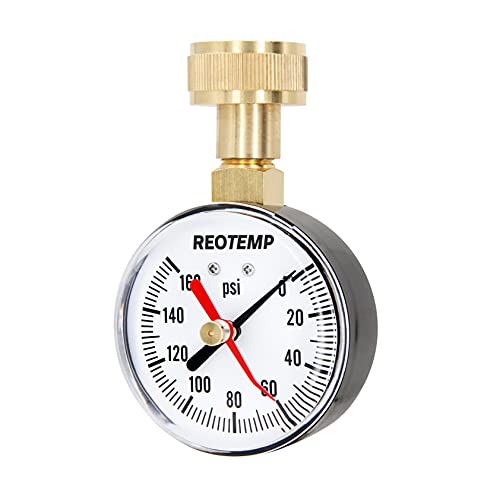
Reotemp PD25H Home Water Pressure Test Gauge with Max Pointer, 0 to 160 PSI
$12.99A max pointer gauge that records the highest pressure seen while nobody was watching, catching spikes a single spot check would miss.
Best for: Diagnosing intermittent pressure spikes or water hammer
Check price on Amazon
Cash Acme EB45 Pressure Regulating Valve, 3/4 Inch
$62.42A compact push to connect regulator for a house measuring consistently above 80 psi.
Best for: A straightforward install without cutting and soldering pipe
Check price on Amazon
Zurn Wilkins NR3XL Pressure Reducing Valve, 3/4 Inch, Double Union
$232.99A union connected bronze regulator that can be serviced without cutting the line again.
Best for: A permanent installation where future service access matters
Check price on AmazonHow we chose
We did not test this equipment in person and we never claim to. Picks are researched from manufacturer specification sheets, published standards and regulatory limits, and the recurring themes in verified owner reviews. Every pick is matched to a real grain capacity, a real micron rating, a real certified claim or a real flow rating rather than to a price bracket, and it is placed in the tier where its published capability actually belongs. We rejected the unbranded flood that dominates several of these search results, because a softener is a pressure vessel on the main line and a filter is the only thing between a contaminant and a glass of water, and neither is a place for a product with no parts channel and no service path. Where a figure is trade convention rather than a published standard we label it that way, and where a manufacturer does not publish a figure we leave it out instead of estimating it. Above all, we do not recommend equipment for a problem nobody has measured.
Frequently asked questions
What counts as normal residential water pressure?
Most houses measure between 40 and 80 psi at a static reading, meaning nothing else in the house is using water at the moment of measurement. That range is what most residential fixtures, filter housings and appliances are designed around, which is why a reading well outside it is worth investigating before assuming a piece of equipment is defective.
Where exactly should I measure water pressure?
An outdoor hose bib gives the most representative reading of what the house main is actually delivering, since a gauge threads directly onto it with no tools. Measure with everything else in the house turned off, since any fixture running at the same time will show a lower, misleading reading that reflects flow demand rather than true static pressure.
What does it mean if my pressure reads below 40 psi?
It points to a supply issue upstream of any treatment equipment: a partially closed main valve, a failing well pump, undersized piping, or occasionally a municipal supply problem. No filter, softener or other treatment device increases pressure, since none of them add energy to the system, so a low reading needs investigating at the source rather than solved with a product purchase.
What does it mean if my pressure reads above 80 psi?
It means installing a pressure regulating valve is worth doing soon rather than later. Sustained pressure above 80 psi accelerates wear on filter housings, reverse osmosis systems, appliance fill valves and plumbing fittings throughout the house, shortening their service life well before they would otherwise fail.
How do I know when to change a filter cartridge based on pressure?
Measure a clean baseline with gauges on each side of the housing right after installing a fresh cartridge, then watch for a rise of 10 to 15 psi against that baseline, which is the industry accepted change out point. Without a clean baseline first, a later reading has nothing meaningful to compare against, and the rated gallons figure on the box is only an upper bound, not a promise.
Can high water pressure actually damage a reverse osmosis system?
Yes, over time. RO tanks, fittings and the membrane housing are rated to a specific maximum pressure, and running consistently above 80 psi accelerates seal wear and fitting failure well before they were otherwise due. A pressure regulator ahead of the system protects it the same way it protects any other filter housing or appliance fill valve in the house.
Get the complete water treatment shopping list
Every item in the starter, complete and premium systems for both city water and well water, with running totals, in one printable list. It opens with the test kit, because that is genuinely the first purchase. No charge.
One list, no sequence of daily emails, and you can leave at any time.
Researched, not professional advice. This page is compiled from published standards, regulatory limits, manufacturer specifications and owner-review consensus, not hands-on testing. Nothing here diagnoses a water problem or says any product makes water safe to drink. Figures described as a rule of thumb are water treatment trade convention rather than published standards, and they are labeled that way wherever they appear. Test your water before you buy equipment: on city water start with the Consumer Confidence Report your utility publishes each year, and on a private well only a certified laboratory test tells you what you have. Bacteria, nitrate, lead, arsenic and PFAS are not do it yourself topics, they are invisible and tasteless, and they need a laboratory and usually a licensed professional rather than a product. Remember that a certification covers a specific claim under a specific standard, so "NSF certified" with no number attached tells you very little.