Softener sizing
Water softener sizing calculator
Quick answer
A 4 person household on 15 grain per gallon water removes about 4,800 grains of hardness a day, which calls for a 64,000 grain softener regenerating roughly every 8.3 days at an efficient salt setting. The nameplate on the box is the capacity at maximum salt dose, not a working figure.
Softener sizing is one multiplication and one division. Almost all the confusion in it comes from two places, and this calculator handles both.
The first is units: laboratories report hardness in milligrams per liter and equipment is sized in grains per gallon, and one grain equals 17.1 milligrams per liter. Reading one as the other makes water look roughly seventeen times harder than it is. The second is the nameplate, which is explained below and is the reason so many softeners regenerate more often than their owners expected.
Size your own softener
4 people on 15 grain water need a 64,000 grain softener, regenerating about every 8.3 days.
| Figure | Value |
|---|---|
| Compensated hardness | 15 gpg |
| Daily water use | 320 gallons |
| Daily hardness load | 4,800 grains |
| Nameplate that fits | 64,000 grains |
| Working capacity at that dose | 44,800 grains |
| Days between regenerations | 8.3 |
| Salt per year | 704 lb |
Shown with the example figures above. Change any field to run your own numbers.
The working
Rule of thumbcompensated hardness = hardness + (iron ppm x 4) + (manganese ppm x 5) daily hardness load = people x gallons per person per day x compensated hardness working capacity = resin cubic feet x grains per cubic foot at your salt dose usable capacity = working capacity - one day of load held in reserve days between regens = usable capacity / daily hardness load nameplate grains = resin cubic feet x 32,000 (at MAXIMUM salt dose)
The resin capacity curve and the 17.1 conversion are published figures. The 80 gallons per person per day and the iron compensation factors are trade convention. Water treatment trade convention rather than a published standard. Taught everywhere, useful for planning, and not a specification. No standards body publishes it.
Softeners at this capacity
Matched to the nameplate your numbers landed on. Remember that the nameplate is the capacity at maximum salt dose, so a unit at this rating delivers less at the efficient setting you should actually run it at.

SoftPro Elite Basic High Efficiency 48,000 Grain Water Softener
$1,289.00 Published specsBuilt around salt efficiency rather than nameplate capacity, with upflow regeneration and a variable reserve that learns the household pattern.
Best for: Somebody who cares more about salt and water used per year than about the sticker capacity
Check price on Amazon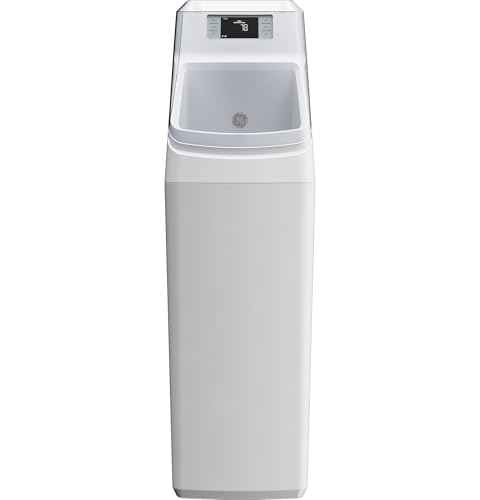
GE Smart Water Softener with Integrated Filtration, 30,000 Grain
$999.00 Published specsSoftening plus filtration in one connected cabinet, for a house with both a hardness and a taste complaint and one place to put a machine.
Best for: A single utility space that has to solve two problems at once
Check price on Amazon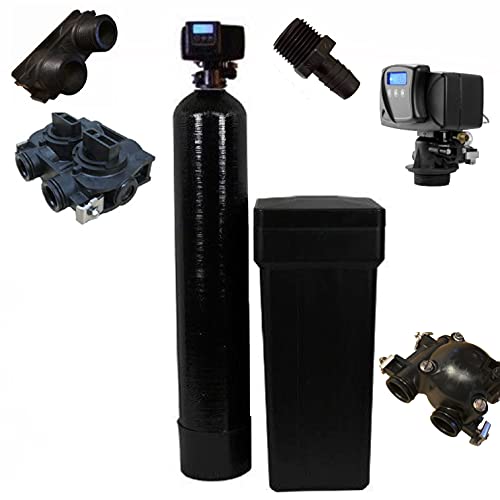
DuraWater Fleck 5600SXT 64,000 Grain Water Softener with 10 Percent Resin
$905.00 Published specsTwo cubic feet of ten percent crosslinked resin, which resists chlorine damage better than the standard eight percent and matters on chlorinated city water.
Best for: A large household, or city water with an aggressive chlorine residual
Check price on Amazon
Aquasure Harmony Series 70,000 Grain Water Softener
$899.99A large nameplate for very hard water or a large household, where a smaller unit would regenerate every two or three days and burn salt doing it.
Best for: Five or more people, or hardness above about 25 grains per gallon
Check price on Amazon
Kenmore Elite 520 Hybrid Water Softener and Whole House Filtration System
$885.58Combines softening and filtration in one cabinet, which saves space and means one unit rather than two to plumb in.
Check before buying: A combined unit means both functions share one service interval and one failure point. Check which NSF/ANSI standard and which specific claim the filtration side is certified for.
Best for: A house that wants both softening and chlorine taste reduction from one appliance
Check price on Amazon
AFWFilters Premium Fleck 64,000 Grain Water Softener with 10 Percent Resin
$879.00 Published specsTwo cubic feet of ten percent crosslinked resin on a Fleck valve, at a lower price than most equivalent builds.
Best for: A large household on hard chlorinated water
Check price on AmazonEvery figure shown is the manufacturer own published specification. None of this is a recommendation for water you have not tested: the arithmetic above is only as good as the numbers you put into it, and on a private well those numbers come from a certified laboratory rather than from a chart.
Why the number on the box is not the number you size on
A softener sold as a 32,000 grain unit contains one cubic foot of resin, and it only reaches that figure at the maximum salt dose of about 15 pounds per cubic foot. Run the same unit at an efficient 6 pounds and it delivers about 20,000 grains.
That is not a defect, it is the trade off, and the curve is steep. The last increment of capacity is bought very expensively in salt. NSF/ANSI 44 sets 3,350 grains per pound of salt as the threshold for a high efficiency certification, and a unit only meets it at the setting the certification was earned at. A high efficiency softener programmed to a maximum salt dose is not running at high efficiency.
What each salt setting delivers
Dropping from a 15 pound salt dose to 6 costs about 33 percent of the capacity and buys roughly 67 percent more grains removed per pound of salt.
Published figure A published standard, regulatory limit, unit conversion or manufacturer specification. It does not change because somebody disagrees with it.
| Salt dose per cubic foot | Grains per cubic foot | Grains per pound of salt |
|---|---|---|
| 6 lb | 20,000 | 3,333 |
| 8 lb | 22,400 | 2,800 |
| 10 lb | 24,000 | 2,400 |
| 12 lb | 27,000 | 2,250 |
| 15 lb | 30,000 | 2,000 |
Resin exchange capacity against salt dose is a published figure from resin manufacturers for standard eight percent crosslinked resin. The NSF/ANSI 44 high efficiency threshold is 3,350 grains per pound.
How the reserve changes the answer
A metered softener regenerates overnight, so it has to still have capacity left between deciding to regenerate and actually doing it. One day of household use is the usual reserve, and it is deducted from the working capacity before the interval is calculated.
Sizing calculations that ignore the reserve overstate the interval, which is why some households get hard water for an hour every week and cannot work out why.
Regenerating too often and not often enough are both problems
The target window is 3 to 14 days, ideally about weekly. More often than that wastes salt and water and shortens resin life. Less often lets the bed sit fully loaded and channel, and on well water it gives bacteria somewhere undisturbed to live, which is why most manufacturers force a regeneration on a calendar regardless of metered demand.
Frequently asked questions
What size water softener do I need?
Multiply household size by 80 gallons per person per day by your measured hardness in grains per gallon, then pick the nameplate that regenerates about weekly at an efficient salt setting. For four people on 15 grain water that is 4,800 grains a day and a 64,000 grain unit. Household size alone never answers it, because hardness varies by more than tenfold between supplies.
Why does the calculator use 80 gallons per person per day?
Because that is the figure the water treatment trade sizes on, and it is deliberately conservative. Published end use studies measure indoor use closer to 59 gallons per person. The conservative figure exists because a softener that runs out of capacity mid cycle delivers hard water without telling anybody, which is a worse failure than regenerating slightly early.
Is a bigger softener more expensive to run?
Not per grain removed. A larger resin bed regenerates less often and can run at a more efficient salt dose, so annual salt cost is frequently lower rather than higher. The real limits on oversizing are purchase price, physical space, and the fact that a bed sitting loaded for more than about two weeks starts to channel, which is why valves force a calendar cycle.
Should I size on the bathroom count on the box?
No. That figure is a flow rate guide, telling you the unit can pass enough water for that many bathrooms. It says nothing about capacity, which depends on your hardness. A 32,000 grain unit rated for four bathrooms is badly undersized on 30 grain water and oversized on 5 grain water, for the same house.
Does hardness have a legal limit?
No. The Environmental Protection Agency sets no maximum contaminant level for hardness and no secondary standard either, because hardness is not a health contaminant. Calcium and magnesium at drinking water concentrations are not harmful. The case for softening is scale in water heaters and appliances, spotting, and soap use, not safety.
What if the calculator says I need more than a residential softener?
Re-check the hardness first, because reading a milligrams per liter figure as grains per gallon inflates it roughly seventeen fold and is the commonest cause of an implausible answer. If the figure is right, the honest answers are a twin tank system that alternates so one tank is always in service, or a light commercial unit sized by a dealer.
Get the complete water treatment shopping list
Every item in the starter, complete and premium systems for both city water and well water, with running totals, in one printable list. It opens with the test kit, because that is genuinely the first purchase. No charge.
One list, no sequence of daily emails, and you can leave at any time.
Researched, not professional advice. This page is compiled from published standards, regulatory limits, manufacturer specifications and owner-review consensus, not hands-on testing. Nothing here diagnoses a water problem or says any product makes water safe to drink. Figures described as a rule of thumb are water treatment trade convention rather than published standards, and they are labeled that way wherever they appear. Test your water before you buy equipment: on city water start with the Consumer Confidence Report your utility publishes each year, and on a private well only a certified laboratory test tells you what you have. Bacteria, nitrate, lead, arsenic and PFAS are not do it yourself topics, they are invisible and tasteless, and they need a laboratory and usually a licensed professional rather than a product. Remember that a certification covers a specific claim under a specific standard, so "NSF certified" with no number attached tells you very little.