Softening
What water softener grain capacity actually means
Quick answer
Grain capacity is the total hardness a softener removes before it needs to regenerate. A 48,000 grain softener only reaches that number at a 15 lb per cubic foot salt dose; run the same 1.5 cubic foot unit at 8 lb and working capacity is about 33,600 grains, not 48,000.
Grain capacity is the most misunderstood number in this entire category, and understanding it correctly changes how every other softener decision gets made. The plain definition is simple: grain capacity is the total amount of hardness, measured in grains, that a softener resin bed can remove between one regeneration and the next. The complication is that the number printed on the box is not a fixed property of the unit, it is a ceiling that only appears at the single most salt intensive setting the unit supports.
Everything below works from the published salt dose curve in the resin capacity chart, so the numbers on this page match what the sizing calculators use rather than a separately rounded estimate.
Why the nameplate number is a ceiling, not a working figure
A cubic foot of standard eight percent crosslinked resin exchanges a different number of grains depending entirely on how much salt is used to regenerate it, and that relationship is published by resin manufacturers rather than invented by any single softener brand. It is also not linear. The last increment of capacity, going from a moderate dose to the maximum, is bought at a steep and increasing salt cost.
Doubling the salt dose from 6 to 15 lb per cubic foot buys only 50 percent more capacity, from 20,000 to 30,000 grains, not double.
Published figure A published standard, regulatory limit, unit conversion or manufacturer specification. It does not change because somebody disagrees with it.
| Salt dose (lb per cu ft) | Grains per cu ft | Grains per lb of salt |
|---|---|---|
| 6 | 20,000 | 3,333 |
| 8 | 22,400 | 2,800 |
| 10 | 24,000 | 2,400 |
| 12 | 27,000 | 2,250 |
| 15 | 30,000 | 2,000 |
A "32,000 grain" nameplate rating is set at the 15 lb maximum dose and is the ceiling this whole table is describing, not a working figure for day to day operation.
Working capacity of common nameplate sizes at a real salt dose
Nameplate ratings are sold in fixed sizes, each corresponding to a specific volume of resin. Multiplying that resin volume by the capacity at whatever salt dose you actually program gives the number that matters for sizing, which is almost always well below the number on the box.
A 48,000 grain nameplate softener delivers about 33,600 grains of working capacity at an efficient 8 lb salt dose, 30 percent below the sticker number.
Published figure A published standard, regulatory limit, unit conversion or manufacturer specification. It does not change because somebody disagrees with it.
| Nameplate rating | Resin volume | Working capacity at 8 lb dose |
|---|---|---|
| 32,000 grain | 1.0 cu ft | 22,400 grains |
| 40,000 grain | 1.25 cu ft | 28,000 grains |
| 48,000 grain | 1.5 cu ft | 33,600 grains |
| 64,000 grain | 2.0 cu ft | 44,800 grains |
Sizing from your daily load rather than the nameplate alone
None of the numbers above mean much until they are compared against your household daily hardness load, covered fully in how to choose a water softener. The short version: divide working capacity by your daily grain load to see roughly how many days between regenerations a given nameplate size and salt dose will actually deliver, then check that figure against the 3 to 14 day target window most manufacturers plan around.
This is also why two households can buy the identical nameplate size and end up with completely different ownership experiences. A household with a light daily load sees a 48,000 grain softener stretch comfortably past two weeks between cycles, while a household with a heavy load on very hard water might see the same nameplate regenerate every four or five days, well inside the acceptable range but far more often than the number on the box implied at the point of sale. Neither household bought the wrong machine. They simply have different daily loads acting against the same working capacity, which is exactly why sizing off the nameplate figure alone, without first working out a daily load, produces so many disappointed softener owners in this category.
Nameplate sizes at different salt doses

Aquasure Harmony Series 32,000 Grain Water Softener
$523.29 Published specsA 1 cubic foot resin bed, delivering 20,000 to 30,000 working grains depending on the salt dose programmed.
Best for: A small household verifying working capacity against a modest daily load
Check price on Amazon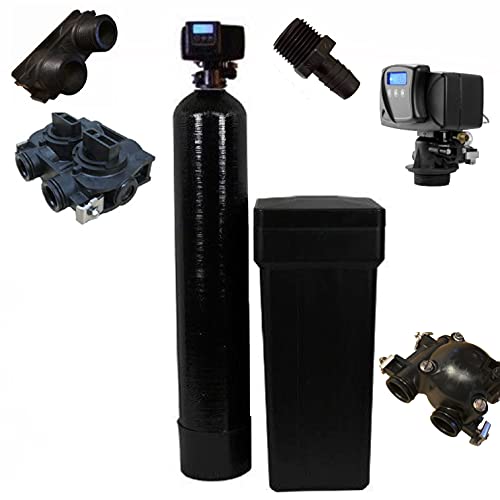
DuraWater Fleck 5600SXT 48,000 Grain Water Softener
$805.00 Published specsA 1.5 cubic foot resin bed on a widely serviced valve, delivering roughly 30,000 to 45,000 working grains across the salt dose range.
Best for: A mid sized household on the Fleck 5600SXT valve platform
Check price on Amazon DuraWater Fleck 5600SXT 64,000 Grain Water Softener with 10 Percent Resin
$905.00 Published specsA 2 cubic foot resin bed with 10 percent crosslink resin, delivering 40,000 to 60,000 working grains depending on salt dose.
Best for: A large household or hard water where a smaller nameplate would regenerate too often
Check price on AmazonHow we chose
We did not test this equipment in person and we never claim to. Picks are researched from manufacturer specification sheets, published standards and regulatory limits, and the recurring themes in verified owner reviews. Every pick is matched to a real grain capacity, a real micron rating, a real certified claim or a real flow rating rather than to a price bracket, and it is placed in the tier where its published capability actually belongs. We rejected the unbranded flood that dominates several of these search results, because a softener is a pressure vessel on the main line and a filter is the only thing between a contaminant and a glass of water, and neither is a place for a product with no parts channel and no service path. Where a figure is trade convention rather than a published standard we label it that way, and where a manufacturer does not publish a figure we leave it out instead of estimating it. Above all, we do not recommend equipment for a problem nobody has measured.
Frequently asked questions
Is grain capacity the same as tank size?
No. Grain capacity is a function of resin volume and salt dose together, not the physical size of the tank alone. Two tanks that look identical from the outside can hold different amounts of resin, and the same resin volume delivers a different working grain capacity depending entirely on how much salt is used to regenerate it.
Why would a manufacturer advertise the ceiling instead of a working figure?
The nameplate ceiling is the single biggest number the resin volume can technically reach, so it makes for a simpler comparison across brands and is easier to market than a range that shifts with salt dose. It is not dishonest, but it is incomplete, which is exactly why sizing correctly means looking past it to the working capacity at the salt dose you intend to actually run.
Does using more salt always increase capacity?
Yes, but with steadily diminishing returns. Moving from 6 to 8 lb per cubic foot buys a meaningful jump in capacity for a modest salt increase, while moving from 12 to 15 lb buys comparatively little extra capacity for a proportionally larger amount of salt, which is why efficiency focused softeners target the lower end of the curve rather than the maximum.
What does NSF/ANSI 44 high efficiency actually certify?
It certifies that a specific model, at a specific published salt setting, removes at least 3,350 grains of hardness per pound of salt used. That efficiency only holds at the exact setting the certification was earned at; the same unit reprogrammed to a much higher salt dose is not operating at its certified efficiency even though it is the identical machine.
If I already own a 32,000 grain softener, can I just add more salt to get more capacity?
Only up to the resin volume you actually have installed, and only within the published curve for that resin, roughly 20,000 to 30,000 grains per cubic foot. Adding salt beyond the maximum published dose for your unit does not create additional capacity, it simply wastes salt without a corresponding gain, since the resin bed itself has a fixed exchange ceiling.
Does a bigger nameplate always mean fewer regenerations?
Yes, at a given daily load and salt dose, more resin volume means more working capacity and therefore more days between regenerations. The tradeoff is that an oversized unit relative to actual daily load ends up regenerating on its forced calendar cycle rather than on genuine demand, which wastes salt and water without the benefit the extra capacity was meant to provide.
Get the complete water treatment shopping list
Every item in the starter, complete and premium systems for both city water and well water, with running totals, in one printable list. It opens with the test kit, because that is genuinely the first purchase. No charge.
One list, no sequence of daily emails, and you can leave at any time.
Researched, not professional advice. This page is compiled from published standards, regulatory limits, manufacturer specifications and owner-review consensus, not hands-on testing. Nothing here diagnoses a water problem or says any product makes water safe to drink. Figures described as a rule of thumb are water treatment trade convention rather than published standards, and they are labeled that way wherever they appear. Test your water before you buy equipment: on city water start with the Consumer Confidence Report your utility publishes each year, and on a private well only a certified laboratory test tells you what you have. Bacteria, nitrate, lead, arsenic and PFAS are not do it yourself topics, they are invisible and tasteless, and they need a laboratory and usually a licensed professional rather than a product. Remember that a certification covers a specific claim under a specific standard, so "NSF certified" with no number attached tells you very little.