Testing
What order should water treatment equipment go in?
Quick answer
Sediment goes first, coarse to fine, then oxidation or an iron filter, then the softener, then any point of use reverse osmosis, with UV always last because it needs the clearest water in the house. On a well, treatment goes after the pressure tank, and an acid neutralizer, if needed, goes first in the treatment train.
This is one of the highest demand questions in the whole category, and it is also one of the most consequential to get wrong, because installing equipment in the wrong sequence does not just underperform, it actively shortens the life of whatever comes after it. Sediment ahead of a softener protects the resin. A softener ahead of an iron filter does not. UV at any point except dead last receives dirtier water than it was ever tested against.
This guide lays out the order for a well water system, where the sequence is longest and least obvious, and the shorter order for a typical city water system, then explains the reasoning behind the two placements that trip people up most: the well pressure tank and the acid neutralizer.
On this page
The order for a well water system, start to finish
- Well pump into the pressure tank. The pressure tank is the mechanical starting point on any well system, buffering the pump on and off cycling into steady household pressure and flow before any treatment stage sees the water.
- Acid neutralizer, if pH is low. If a certified laboratory test shows pH below the secondary standard range of 6.5 to 8.5, the neutralizer goes first in the treatment train, ahead of sediment and everything else, because low pH is corrosive to plumbing and to the media in every stage that follows it.
- Sediment filtration, staged coarse to fine. Well water carries an unpredictable particle load. Staging from a coarse 50 micron stage down to a fine 5 or 1 micron stage protects every downstream component, including a spin down screen ahead of the pressure tank itself for visibly gritty water.
- Oxidation or iron filter. Dissolved iron, manganese and hydrogen sulfide are addressed here, ahead of the softener, since a softener bed can be fouled or overwhelmed by iron a dedicated filter should have caught first.
- Water softener. Ion exchange for hardness happens after the water is already clear and iron reduced, since resin holds only a limited amount of dissolved iron before its capacity and lifespan both suffer.
- Point of use reverse osmosis. A dedicated under sink or countertop RO system for drinking water is placed after whole house treatment, since it performs a final, highest resolution polish rather than doing the heavy lifting the earlier stages already handled.
- Ultraviolet disinfection, last. UV goes at the very end of the line because it needs the clearest water of anything in the house to work as tested: iron below 0.3 mg/L, manganese below 0.05 mg/L, and hardness below about 7 gpg or the quartz sleeve scales and blocks the dose from reaching the water.
The order for a typical city water system
City water is usually a shorter line, since a treatment plant has already handled most of what a well leaves to the homeowner. Sediment and carbon filtration, addressing chlorine taste and any fine particulate, typically comes first. A softener follows if the Consumer Confidence Report or a hardness strip shows hard water. Point of use RO for drinking water sits after that. UV is uncommon on city water specifically because a municipal supply is already disinfected, but where it is used for extra protection, the same last in line rule applies for the identical reason: it needs the clearest water available.
Why UV needs to be last, in published numbers
Hardness above roughly 7 grains per gallon scales the quartz sleeve and blocks the dose from ever reaching the water, which is why UV sits at the very end of the line.
Published figure A published standard, regulatory limit, unit conversion or manufacturer specification. It does not change because somebody disagrees with it.
| Parameter | Limit for UV to work as tested |
|---|---|
| Ultraviolet transmittance | 75% or higher |
| Turbidity | Below 1 NTU |
| Iron | Below 0.3 mg/L |
| Manganese | Below 0.05 mg/L |
| Hardness | Below roughly 7 gpg, or the sleeve scales |
| Tannins | Below 0.1 mg/L |
Ultraviolet treatment removes nothing from the water. It inactivates organisms so they cannot reproduce, and everything that was in the water beforehand is still physically present afterward, which is exactly why installing it upstream of sediment or iron treatment defeats the entire mechanism.
Why the acid neutralizer moves ahead of everything else
Low pH corrodes plumbing and degrades media in every stage downstream of it, which is the reason it gets treated first rather than wherever it happens to fit physically. Calcite, the most common neutralizer media, works by slowly dissolving into the water to raise pH, and that mechanism has a direct consequence for sizing: calcite adds hardness as it works. A house running a calcite neutralizer generally needs its softener sized larger, or sized after seeing hardness measured again downstream of the neutralizer, rather than sized purely on the original well test number.
Where added hardness is genuinely unacceptable, or where pH sits below about 5.5, a metered soda ash injection system is the alternative, since it raises pH through a chemical feed rather than a dissolving media bed and does not add hardness the same way. It is a system somebody has to maintain rather than a set and forget media tank, which is its own tradeoff.
Building the sequence with real equipment

iSpring WSP-50 Spin Down Sediment Filter, 50 Micron
$59.99A flushable spin down screen sized to sit ahead of the pressure tank on well water carrying visible grit.
Best for: The coarse first stage on a well with sand or sediment
Check price on Amazon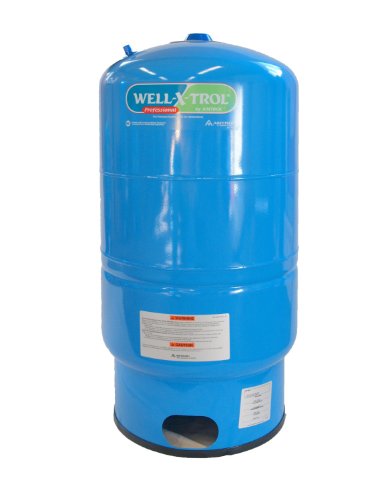
Amtrol Well-X-Trol WX-202 Well Pressure Tank, 20 Gallon
$327.99The reference residential pressure tank with a butyl diaphragm, buffering pump cycling before treatment begins.
Best for: The mechanical starting point of a well system
Check price on Amazon
AFWFilters Acid Neutralizer for Well Water, Calcite
$699.00A calcite based neutralizer sized to sit first in the treatment train on low pH well water.
Check before buying: A calcite neutralizer ADDS HARDNESS as it works. If a softener is also going in, it belongs after the neutralizer and has to be sized on the raised hardness.
Best for: Water testing below the 6.5 to 8.5 secondary standard range
Check price on Amazon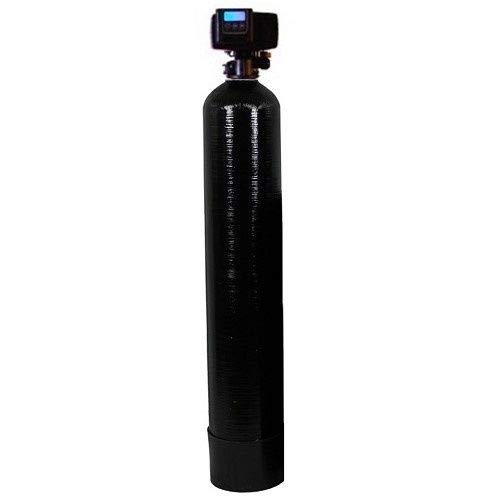
DuraWater Air Injection Iron Filter, 1.0 Cubic Foot
$810.00An air injection oxidizing filter placed ahead of the softener to address dissolved iron before resin ever sees it.
Best for: Dissolved iron above a softener own published limit
Check price on Amazon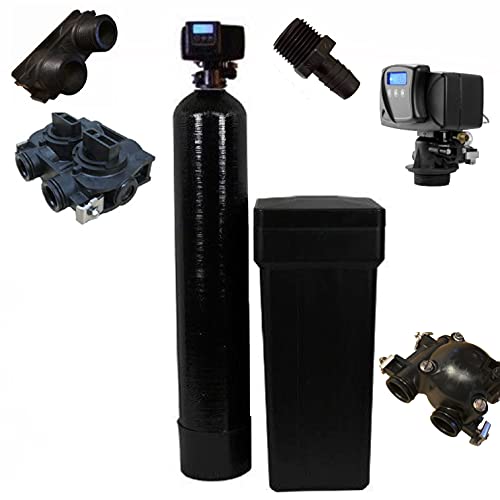
DuraWater Fleck 5600SXT 48,000 Grain Water Softener
$805.00 Published specsA softener on the widely serviced Fleck 5600SXT valve, placed after sediment and iron stages.
Best for: Hardness treatment once the water ahead of it is already clear
Check price on Amazon
VIQUA VH410M UV Water Treatment System, 18 GPM
$1,310.00A UV system placed last in line, where the water finally meets the clarity it needs to deliver its rated dose.
Best for: The final disinfection stage after every other treatment step
Check price on AmazonHow we chose
We did not test this equipment in person and we never claim to. Picks are researched from manufacturer specification sheets, published standards and regulatory limits, and the recurring themes in verified owner reviews. Every pick is matched to a real grain capacity, a real micron rating, a real certified claim or a real flow rating rather than to a price bracket, and it is placed in the tier where its published capability actually belongs. We rejected the unbranded flood that dominates several of these search results, because a softener is a pressure vessel on the main line and a filter is the only thing between a contaminant and a glass of water, and neither is a place for a product with no parts channel and no service path. Where a figure is trade convention rather than a published standard we label it that way, and where a manufacturer does not publish a figure we leave it out instead of estimating it. Above all, we do not recommend equipment for a problem nobody has measured.
Frequently asked questions
Why does UV always go last in the treatment train?
UV needs the clearest water in the house to deliver its rated dose: turbidity below 1 NTU, iron below 0.3 mg/L, manganese below 0.05 mg/L, and hardness below roughly 7 gpg before the sleeve scales. Every other stage exists partly to deliver that clarity, so placing UV anywhere earlier means it receives water dirtier than it was ever tested against, and dose delivery fails silently.
Does an acid neutralizer really need to go before sediment filtration?
Yes, when pH testing shows a genuinely low reading. Low pH corrodes plumbing and degrades media in every downstream stage, so raising it first protects everything that follows. It also changes softener sizing, since a calcite neutralizer adds hardness as it works, meaning the softener should be sized against the water leaving the neutralizer, not the original raw well number.
Why does the pressure tank come before the treatment equipment on a well?
Backwashing equipment, like an iron filter or a softener, needs steady pressure and flow to regenerate correctly, and a well pump alone delivers cycling, uneven output rather than that steady supply. The pressure tank buffers the pump into consistent pressure first, which is why treatment sits downstream of it rather than ahead of it, with a spin down screen as the one common exception.
Can I skip the spin down screen if I already have a sediment filter housing?
Not on visibly gritty well water. A spin down screen protects the pressure tank and pump components from coarse grit before the water ever reaches the pressure tank, which sits ahead of the sediment housing in the sequence. A sediment housing downstream still matters for finer particulate, but it does not protect the pump and tank the way a spin down screen ahead of them does.
What happens if I install a softener ahead of an iron filter by mistake?
Dissolved iron beyond a softener own published limit, generally 1 to 5 ppm depending on the specific unit, fouls the resin bed and shortens its working life, while iron that has already oxidized to particles plugs the resin outright rather than being exchanged by it. Either way, the softener ends up doing a job it was never designed for, and the fix is moving iron treatment ahead of it rather than upgrading the softener.
Where does a reverse osmosis system fit in the overall order?
A point of use RO system, typically installed under a sink for drinking water, sits after whole house treatment rather than at the front of the line. It performs a final, high resolution polish once sediment, iron and hardness have already been addressed upstream, and putting it first would ask the membrane to handle a load whole house equipment is far better suited to intercept first.
Get the complete water treatment shopping list
Every item in the starter, complete and premium systems for both city water and well water, with running totals, in one printable list. It opens with the test kit, because that is genuinely the first purchase. No charge.
One list, no sequence of daily emails, and you can leave at any time.
Researched, not professional advice. This page is compiled from published standards, regulatory limits, manufacturer specifications and owner-review consensus, not hands-on testing. Nothing here diagnoses a water problem or says any product makes water safe to drink. Figures described as a rule of thumb are water treatment trade convention rather than published standards, and they are labeled that way wherever they appear. Test your water before you buy equipment: on city water start with the Consumer Confidence Report your utility publishes each year, and on a private well only a certified laboratory test tells you what you have. Bacteria, nitrate, lead, arsenic and PFAS are not do it yourself topics, they are invisible and tasteless, and they need a laboratory and usually a licensed professional rather than a product. Remember that a certification covers a specific claim under a specific standard, so "NSF certified" with no number attached tells you very little.