Softening
Which water softener actually works on a well?
Quick answer
Most residential softeners publish a dissolved iron limit of roughly 1 to 5 ppm, and only for iron that is still dissolved and clear in a glass. A twin tank design like the Fleck 9100SXT keeps one resin tank in service while the other regenerates, which matters most on a well with limited overnight recovery. Get a certified laboratory test before choosing either.
A well changes what a softener is being asked to do compared with city water. Nobody tests a well but the owner, there is no annual report to pull, and hardness is frequently the smallest of the problems in the water, not the only one. Iron, manganese, sulfur odor, low pH and occasionally bacteria all show up on wells and none of them are jobs a softener does well, or in some cases at all.
A softener genuinely handles hardness and a modest amount of dissolved iron in the same pass, which is why several of the picks below are marketed toward well owners specifically. The limit is real, though: once iron has already oxidized into rust particles, or iron bacteria are present, the resin bed fouls rather than works, and no softener fixes that on its own.
Nothing on this page substitutes for a certified laboratory test. We compared manufacturer published specifications and control valve documentation with verified owner reviews from well households specifically, rather than installing anything in a well system we own.
On this page
- How much dissolved iron can a softener actually handle?
- Best well water softener for a first purchase
- Best well water softener for most households
- Best well water softener for continuous demand or heavier iron
- Single tank or twin tank: which actually fits a well?
- What a softener will not fix on well water
- How we chose
How much dissolved iron can a softener actually handle?
A softener exchanges dissolved (ferrous, clear water) iron the same way it exchanges calcium, up to the manufacturer published limit, commonly in the 1 to 5 ppm range depending on the model. Every part per million of that iron also adds to the hardness load the resin has to clear, using the same compensation figure the trade applies to manganese.
Every part per million of dissolved iron adds roughly 3 to 5 grains per gallon of compensated hardness on top of whatever a lab test reports for calcium and magnesium.
Rule of thumb Water treatment trade convention rather than a published standard. Taught everywhere, useful for planning, and not a specification. No standards body publishes it.
| Iron condition | Compensated hardness added per ppm |
|---|---|
| Low, near detection limit | 3 grains per gallon |
| Typical well iron | 4 grains per gallon |
| High iron or acidic well water | 5 grains per gallon |
No standards body publishes this figure. It is a widely taught trade rule of thumb, not a certified number, and it only applies to iron confirmed dissolved by a certified laboratory test. Already oxidized iron or iron bacteria are a different problem entirely and this table does not apply to either.
Best well water softener for a first purchase
This tier assumes a lab test has already confirmed modest hardness and little or no dissolved iron. A single tank metered softener at a lower nameplate is the right amount of equipment for that water, not a twin tank system built for a heavier iron or continuous demand load.

Aquasure Harmony Series 32,000 Grain Water Softener
$523.29 Published specsA smaller nameplate single tank softener, right sized for a well household that has confirmed light hardness and no measurable iron before buying anything.
Best for: A small well household on confirmed hardness under about 15 grains per gallon with little to no dissolved iron
Check price on AmazonBest well water softener for most households
The Fleck 5600SXT valve shows up repeatedly in well water reviews specifically because independent technicians in rural areas can service it decades after a brand relationship with a national retailer stops mattering. This tier fits confirmed moderate hardness with dissolved iron inside the published limit.
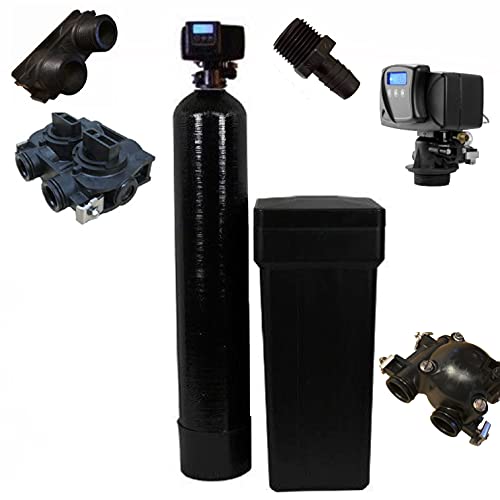
DuraWater Fleck 5600SXT 48,000 Grain Water Softener
$805.00 Published specsA serviceable single tank softener at a nameplate that covers most three to four bathroom well households once hardness and dissolved iron are both confirmed.
Best for: A well household with confirmed moderate hardness and dissolved iron inside the published limit
Check price on AmazonBest well water softener for continuous demand or heavier iron
A twin tank design removes the soft water gap that a single tank system has while it regenerates, which matters more on a well than on city water because a well also has to physically recover the water used during that cycle. The Iron Pro version below is built with fine mesh resin specifically for wells carrying dissolved iron near the upper end of the published range.

DuraWater Fleck 9100SXT Twin Tank Water Softener, 48,000 Grain
$1,590.00 Published specsA twin tank softener with no gap in soft water delivery, aimed at a well with limited overnight recovery or a household that runs water around the clock.
Best for: A household that genuinely uses water around the clock, or a well with limited recovery
Check price on Amazon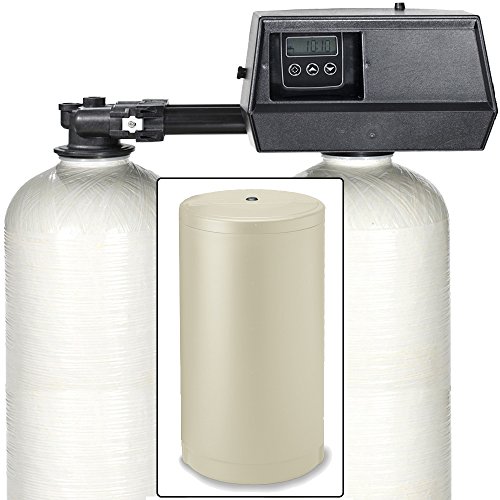
AFWFilters Iron Pro Twin Tank Water Softener with Fleck 9100SXT, 48,000 Grain
$1,689.00 Published specsThe same twin tank Fleck 9100SXT platform built with fine mesh resin, marketed specifically at well water carrying a confirmed, modest dissolved iron level.
Check before buying: Check the published iron limit for this unit against your laboratory result. A softener is not an iron filter and fouls if it is used as one.
Best for: Well water with a modest measured dissolved iron level and continuous demand
Check price on AmazonWho should not buy this tier: Skip a twin tank iron pro setup if a certified laboratory test shows little to no dissolved iron and the well recovers overnight without trouble. A single tank unit at roughly half the price handles that water fine, and the twin tank premium only pays for itself when continuous demand or genuine iron load is confirmed, not assumed.
Single tank or twin tank: which actually fits a well?
A single tank softener has a short window during regeneration, usually overnight, where the house runs on unsoftened, bypassed water. On city water that window rarely matters. On a well with a small pressure tank or a low recovery rate, it can coincide with the exact hours the well is also trying to refill, and a large household can notice both problems at once. The full comparison is at single tank versus dual tank softeners.
What a softener will not fix on well water
A softener is not a substitute for an iron filter once iron has already oxidized into visible rust particles, and it is not a treatment for iron bacteria, which fouls resin rather than being removed by it. It does nothing for sulfur odor, does not raise low pH, and does nothing for bacteria of any kind, all of which need their own equipment after a certified laboratory test identifies them specifically. See best iron filters for well water and best well water filtration systems if your lab results point that direction, and how to test well water if you have not tested yet.
How we chose
We compared manufacturer published specifications, control valve documentation and verified owner reviews written specifically by well water households, since a review from city water does not carry over to iron, continuous demand or well recovery concerns. Nothing here was installed on a well we own, and any manufacturer figure not published was left out rather than estimated.
How we chose
We did not test this equipment in person and we never claim to. Picks are researched from manufacturer specification sheets, published standards and regulatory limits, and the recurring themes in verified owner reviews. Every pick is matched to a real grain capacity, a real micron rating, a real certified claim or a real flow rating rather than to a price bracket, and it is placed in the tier where its published capability actually belongs. We rejected the unbranded flood that dominates several of these search results, because a softener is a pressure vessel on the main line and a filter is the only thing between a contaminant and a glass of water, and neither is a place for a product with no parts channel and no service path. Where a figure is trade convention rather than a published standard we label it that way, and where a manufacturer does not publish a figure we leave it out instead of estimating it. Above all, we do not recommend equipment for a problem nobody has measured.
Sources
- DuraWater and AFWFilters published specification sheets for the Fleck 9100SXT platform
- Trade convention figures for iron and manganese hardness compensation as used across the water treatment industry
Frequently asked questions
Can a water softener remove iron from well water?
Only dissolved (ferrous) iron, and only up to a manufacturer published limit that is commonly 1 to 5 ppm. Iron that has already oxidized into rust particles will plug the resin instead of being exchanged by it, and iron bacteria fouls the bed entirely. A certified laboratory test is the only way to know which kind of iron your well actually has before buying equipment for it.
Do I need a twin tank softener on well water?
Only if the well has limited recovery, the household uses water around the clock, or dissolved iron is confirmed near the upper end of the published range. A single tank metered softener handles most confirmed moderate hardness and low iron wells fine, and a twin tank's main benefit, no soft water gap during regeneration, is not worth its higher price for a household that would not notice that gap anyway.
Why does well water need a lab test before buying a softener?
A well has no utility publishing an annual water quality report, so nobody has tested it but the owner. Hardness can be checked with a strip, but iron, manganese, pH, nitrate and bacteria all need a certified laboratory test to identify accurately, since several of them are invisible and tasteless and give no warning when equipment stops working.
Will a softener fix a sulfur smell in well water?
No. Sulfur odor comes from hydrogen sulfide gas or sulfur reducing bacteria, and a standard ion exchange softener is not built to treat either one. That problem needs its own oxidation or aeration based treatment sized to a confirmed sulfur level from a certified laboratory test, not a softener bought on the assumption that it handles every well water complaint.
What is the difference between the Fleck 5600SXT and the Fleck 9100SXT?
The 5600SXT runs a single resin tank and has a brief unsoftened window during each regeneration. The 9100SXT runs two tanks so one stays in service while the other regenerates, removing that gap entirely. The 9100SXT costs meaningfully more and is worth it mainly for continuous demand households or wells with limited overnight recovery, not for a typical single family schedule.
Is well water safe to drink after softening?
Softening addresses hardness and, within limits, dissolved iron. It says nothing about whether well water is safe to drink, which is a laboratory result rather than a property any product can guarantee. Bacteria, nitrate, arsenic and other contaminants need their own certified laboratory testing and usually a licensed professional, regardless of what softening equipment is installed upstream of the tap.
Get the complete water treatment shopping list
Every item in the starter, complete and premium systems for both city water and well water, with running totals, in one printable list. It opens with the test kit, because that is genuinely the first purchase. No charge.
One list, no sequence of daily emails, and you can leave at any time.
Researched, not professional advice. This page is compiled from published standards, regulatory limits, manufacturer specifications and owner-review consensus, not hands-on testing. Nothing here diagnoses a water problem or says any product makes water safe to drink. Figures described as a rule of thumb are water treatment trade convention rather than published standards, and they are labeled that way wherever they appear. Test your water before you buy equipment: on city water start with the Consumer Confidence Report your utility publishes each year, and on a private well only a certified laboratory test tells you what you have. Bacteria, nitrate, lead, arsenic and PFAS are not do it yourself topics, they are invisible and tasteless, and they need a laboratory and usually a licensed professional rather than a product. Remember that a certification covers a specific claim under a specific standard, so "NSF certified" with no number attached tells you very little.