Softening
48,000 grain or 64,000 grain water softener: how to size it correctly
Quick answer
The 48,000 and 64,000 grain nameplates describe capacity at the worst salt efficiency, and hold 1.5 and 2.0 cubic feet of resin respectively. Size on measured hardness multiplied by household size, not on bathroom count, and aim for a regeneration cycle every 3 to 14 days rather than buying the bigger number by default.
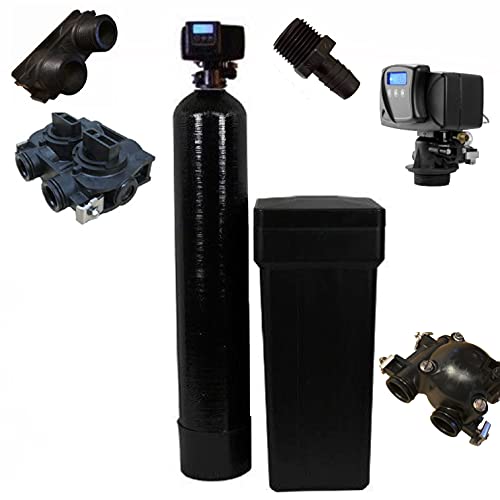
DuraWater Fleck 5600SXT 48,000 Grain Water Softener
$805.00 Published specsThe smaller nameplate on the Fleck 5600SXT valve platform, at 1.5 cubic feet of resin.
Best for: Anyone who expects to still be servicing this softener in a decade
Check price on Amazon DuraWater Fleck 5600SXT 64,000 Grain Water Softener with 10 Percent Resin
$905.00 Published specsThe larger nameplate on the same control valve platform, at 2.0 cubic feet of resin and a ten percent crosslink for extra chlorine resistance.
Best for: A large household, or city water with an aggressive chlorine residual
Check price on AmazonA 48,000 grain and a 64,000 grain softener are nameplate figures earned at the manufacturer maximum salt dose, and the honest way to choose between them is measured hardness times household size, not the number printed on the box or the bathroom count on the label. The two nameplates most often show up on the exact same control valve platform, differing mainly in resin volume: 1.5 cubic feet for 48,000 grains and 2.0 cubic feet for 64,000 grains.
Oversizing is not expensive the way it sounds, since a bigger bed simply regenerates less often and can be run at a more efficient salt dose. The real failure mode runs the other direction: a resin bed left loaded for more than roughly two weeks between regenerations starts to channel, which is why every control valve forces a calendar based regeneration regardless of metered usage.
On this page
What does the nameplate number actually mean?
Both the 48,000 grain and 64,000 grain versions of this softener use the same Fleck 5600SXT digital metered control valve, and the difference between them is almost entirely the resin bed: 1.5 cubic feet against 2.0 cubic feet. Grain capacity is the total hardness a softener removes between regenerations, and the nameplate number is measured at the manufacturer maximum salt dose, which is also the least efficient point on the salt efficiency curve. Run the same resin bed at a lower salt dose and it holds meaningfully fewer grains, which is why two softeners with the same nameplate rating from different makers, or the same maker at different salt settings, can behave differently in the same house.
48,000 vs 64,000 grain, same control valve
The jump from 48,000 to 64,000 grains is mostly resin volume, from 1.5 to 2.0 cubic feet, on the same control valve platform.
Published figure A published standard, regulatory limit, unit conversion or manufacturer specification. It does not change because somebody disagrees with it.
| Spec | 48,000 grain | 64,000 grain |
|---|---|---|
| Resin volume | 1.5 cubic feet | 2.0 cubic feet |
| Control valve | Fleck 5600SXT, digital metered | Fleck 5600SXT, digital metered |
| Typical resin crosslink | 8 percent standard | Available at 10 percent for extra chlorine resistance |
Nameplate grain capacity is measured at the manufacturer maximum salt dose, which is also the least salt efficient setting on the curve.
The sizing math, in your own numbers
Daily hardness load
Rule of thumbPeople in household x 80 gallons per person per day x measured hardness in grains per gallon = grains of hardness removed per day
Eighty gallons per person per day is trade sizing convention, not a measured figure. Measured hardness has to come from your own test strip or the utility Consumer Confidence Report.
A worked example, with an assumed hardness
Take a household of four people on water measured at 20 grains per gallon, which is common on hard city water. At the 80 gallon per person per day sizing convention, that is 320 gallons a day carrying 20 grains per gallon, or 6,400 grains removed daily. A 48,000 grain nameplate run at roughly 80 percent of capacity before triggering a regeneration, a common metered valve setting, holds about 38,400 usable grains, which divides out to a regeneration every 6 days. The 64,000 grain nameplate at the same 80 percent reserve holds about 51,200 usable grains, or a regeneration every 8 days. Both land inside the 3 to 14 day target window, and either would work; the 64,000 grain unit simply regenerates less often for the same household.
When does oversizing make sense, and when does undersizing bite back?
A 64,000 grain unit costs more up front and takes more space for the resin tank, but running a bigger bed less often is not an efficiency penalty, since the manufacturer published salt dose per regeneration determines total salt use rather than nameplate size alone. Undersizing is the costlier mistake in practice: a resin bed that regenerates every 2 or 3 days burns through salt and water constantly and wears the control valve components faster from sheer cycle count, while a bed left sitting loaded past roughly two weeks between cycles is prone to channeling, which is why every metered valve enforces some calendar based override regardless of how little water was actually used.
Frequently asked questions
Is a 64,000 grain softener always better than a 48,000 grain one?
Not automatically. A larger nameplate means more resin and a longer stretch between regenerations for the same household, which some people value, but it also costs more and takes more floor space for the same result if the household hardness and size do not call for it. Size on measured hardness multiplied by household size and target a regeneration cycle every 3 to 14 days rather than assuming bigger is simply better.
Why do two softeners with the same grain rating perform differently?
The nameplate figure is measured at the manufacturer maximum salt dose, which is also the least efficient point on the salt efficiency curve, and different makers publish that dose differently. Two 48,000 grain units from different brands can hold a noticeably different number of usable grains at a lower, more common salt setting, so comparing published capacity at the same salt dose matters more than comparing the headline number alone.
What happens if my softener is undersized for my household?
It regenerates far more often than the target 3 to 14 day window, sometimes every 2 or 3 days, which burns through salt and water and puts more wear cycles on the control valve over the life of the unit. It also risks running out of capacity between cycles, which sends unsoftened water through the house without any obvious warning until somebody notices soap is not lathering the way it should.
What happens if my softener is oversized for my household?
Very little goes wrong mechanically, since a bigger resin bed simply regenerates less often and can run at a more efficient salt dose per grain removed. The real risk with an oversized bed is the opposite of what people expect: if it regenerates too infrequently, beyond roughly two weeks, the resin sitting loaded that long can start to channel, which is why control valves force a calendar based regeneration regardless of metered usage.
Should I size by bathroom count like the packaging suggests?
Bathroom count on a box is a rough proxy for household size and peak flow rate, not a capacity guide, and two houses with the same bathroom count can have very different hardness levels or numbers of people living there. Measured hardness in grains per gallon, multiplied by the actual number of people in the household, is the number that should drive the grain capacity decision.
Where can I find the exact regeneration frequency for my own household?
A sizing calculator that takes your measured hardness, household size and the specific nameplate capacity under consideration will give a working regeneration estimate rather than a generic rule of thumb. The published resin capacity chart for the specific salt dose you plan to run the unit at is the other number worth checking before finalizing a purchase.
Get the complete water treatment shopping list
Every item in the starter, complete and premium systems for both city water and well water, with running totals, in one printable list. It opens with the test kit, because that is genuinely the first purchase. No charge.
One list, no sequence of daily emails, and you can leave at any time.
Researched, not professional advice. This page is compiled from published standards, regulatory limits, manufacturer specifications and owner-review consensus, not hands-on testing. Nothing here diagnoses a water problem or says any product makes water safe to drink. Figures described as a rule of thumb are water treatment trade convention rather than published standards, and they are labeled that way wherever they appear. Test your water before you buy equipment: on city water start with the Consumer Confidence Report your utility publishes each year, and on a private well only a certified laboratory test tells you what you have. Bacteria, nitrate, lead, arsenic and PFAS are not do it yourself topics, they are invisible and tasteless, and they need a laboratory and usually a licensed professional rather than a product. Remember that a certification covers a specific claim under a specific standard, so "NSF certified" with no number attached tells you very little.