Filtration
Filter pitcher or under sink filter: which one is actually worth it
Quick answer
An under sink filter beats a pitcher on almost every measure except upfront price: cartridges commonly run 12 to 24 months instead of about 40 gallons, and it needs no refilling. A pitcher is an aesthetic device unless the specific model carries a certified health claim, and no pitcher answers bacteria, nitrate or arsenic.
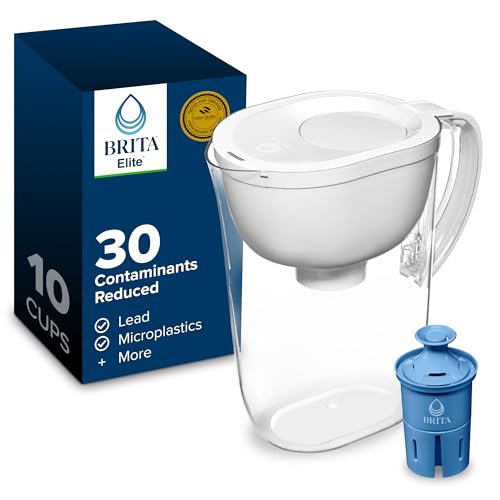
Brita Large 10 Cup Elite Water Filter Pitcher
$36.99Ten cup capacity with a cartridge carrying a specific certified reduction claim beyond plain taste, which most pitcher filters do not have at all.
Check before buying: Check the specific certified claims for the Elite cartridge rather than assuming. A pitcher is never an answer to bacteria, nitrate, arsenic or a well that has not been tested.
Best for: Renters and anyone who cannot install anything
Check price on Amazon
Waterdrop 15UA Under Sink Water Filter System, 19,000 Gallons
$51.29Rated for 19,000 gallons and about 24 months between cartridge changes, installed once under the sink with no daily refilling.
Best for: A household that would rather change a cartridge every other year
Check price on AmazonAn under sink filter is the better buy for nearly every household that already knows what it is treating for: it holds far more capacity between cartridge changes, needs no refilling, and treats every glass drawn from its own tap rather than whatever was poured into a pitcher lid. A pitcher wins on one thing only, the lowest possible entry price, and it does that job of improving taste reasonably well while doing almost nothing else the marketing on the box implies.
Pitcher filtration is the most over claimed product in the entire water treatment category. Most pitcher cartridges are built around granular carbon with no defined pore structure, so they reduce chlorine taste and a handful of aesthetic complaints and stop there. A pitcher is not an answer to bacteria, nitrate or arsenic in any case, and treating one like it is the most common and most risky assumption a reader can make about this product class.
On this page
Is a pitcher ever actually enough?
A pitcher is a reasonable purchase for a renter who cannot install anything, or for anyone whose only complaint is a chlorine taste on city water that the utility Consumer Confidence Report already shows meets every published limit. The Brita Elite pitcher is one of the few in this category that goes further than plain taste, with a cartridge that carries a specific certified reduction claim rather than a vague one. Even there, a certified pitcher claim covers exactly the substances named on its own certification sheet and nothing else, and it is never a response to a positive bacteria, nitrate or arsenic result. Those need a certified laboratory test and usually a licensed professional or the local health department before any equipment decision, pitcher or otherwise.
Why does an under sink filter last so much longer?
An under sink cartridge sits in a sealed housing fed directly from the cold supply line, so it processes water only when a tap opens rather than sitting exposed to air and hand refilling. That is why a system such as the Waterdrop 15UA is rated for 19,000 gallons and about 24 months of service on municipal water, next to roughly 40 gallons and about two months on a typical basic pitcher cartridge. The larger housing also holds more carbon and, on some builds, a KDF stage, which is the physical reason it holds up longer rather than a marketing distinction.
Side by side: what changes and what does not
A typical under sink cartridge is rated for roughly 19,000 gallons and 24 months, next to about 40 gallons and 2 months on a basic pitcher cartridge.
Published figure A published standard, regulatory limit, unit conversion or manufacturer specification. It does not change because somebody disagrees with it.
| Question | Filter pitcher | Under sink filter |
|---|---|---|
| Where it treats water | One pour into the reservoir at a time | Every draw from its own dedicated line |
| Published cartridge life, typical | About 40 gallons or 2 months | 12 to 24 months, longer on some KDF builds |
| Daily upkeep | Refill by hand, repeatedly | None once installed |
| Certified health claim available | Rare, check the specific model | More common, check the specific standard |
| Answers a positive bacteria, nitrate or arsenic test | No, never | No, unless separately certified for that exact claim and only after a certified laboratory retest |
| Typical upfront cost | Lowest in the category | Moderate, plus a one time install |
A certified claim on either product covers only the specific substance named on its own certification sheet, never the whole category of contaminants.
What does NSF/ANSI 42 vs 53 actually mean on these products?
Most pitcher and under sink cartridges alike carry an NSF/ANSI 42 certification, which covers aesthetic effects only: chlorine taste, odor and some particulate. That is not a health effects claim and it is not a lead claim, regardless of how the packaging reads. A smaller number of products, including the Waterdrop 15UA and the Brita Elite pitcher, carry an additional, separately earned NSF/ANSI 53 claim for lead specifically. Reading which standard covers which substance, on the actual certification sheet for the exact model, matters more than the word certified printed anywhere on the box.
Which one should you actually buy?
Buy the pitcher if you rent, move often, or have a single, already confirmed aesthetic complaint and nowhere to install anything. Buy the under sink system once the space under the sink is available and the goal is to stop thinking about a filter for a year or two at a time, especially in a household that drinks and cooks with tap water daily rather than occasionally. Neither one is the answer to a positive well water test for bacteria, nitrate or arsenic. That determination needs a certified laboratory test first, and treatment sized to the actual result rather than to either of these two point of use products.
Frequently asked questions
Can a pitcher filter remove lead from drinking water?
Only a specific model with a separately certified NSF/ANSI 53 claim for lead does, and most pitcher cartridges do not carry that claim at all, only NSF/ANSI 42 for taste and odor. Check the exact certification sheet for the model under consideration rather than assuming the word filter covers lead. If a household is concerned about lead specifically, a certified laboratory test on the actual tap water is the correct first step, not a pitcher purchase.
How much water does an under sink filter actually treat before it needs changing?
It depends entirely on the manufacturer published rating for the specific cartridge, and the range is wide. The Waterdrop 15UA is rated for about 19,000 gallons or roughly 24 months on municipal water, while a smaller cartridge such as the Waterdrop 10UA is rated closer to 12 months. Check the published rating for the exact model rather than assuming all under sink systems last the same length of time.
Is an under sink filter harder to install than a pitcher?
It needs a one time connection to the cold supply line under the sink, which many direct connect models are built to do without cutting into existing plumbing, plus a dedicated small tap at the counter on some builds. A pitcher needs no installation at all. That one time effort is the tradeoff for a cartridge that lasts many times longer and needs no daily refilling once it is in place.
My well tested positive for bacteria. Will a pitcher or under sink filter fix that?
No. Neither a pitcher nor a standard carbon or KDF under sink filter is built to address bacteria, and relying on either one after a positive result carries real risk because bacteria is invisible and gives no taste warning when equipment stops working. A positive coliform result needs a certified laboratory retest and guidance from the local health department, since it usually points to a problem with the well itself rather than something a filter fixes.
Do pitcher filters and under sink filters remove the same things?
Not usually. Most of both categories are certified only under NSF/ANSI 42 for chlorine taste, odor and some particulate, which is an aesthetic claim rather than a health effects claim. A smaller number of models in each category carry an additional, separately certified claim, most often for lead under NSF/ANSI 53. Check the specific certification sheet for the exact model rather than assuming pitcher and under sink cartridges perform the same job.
Does an under sink filter waste water the way reverse osmosis does?
No. A standard carbon or KDF under sink filter, including an ultrafiltration model such as the Waterdrop TSU, produces no wastewater at the drain, unlike a conventional reverse osmosis system. It also does not reduce total dissolved solids or remove dissolved contaminants such as nitrate or arsenic the way reverse osmosis does, so it solves a different problem even though it installs in a similar spot under the sink.
Get the complete water treatment shopping list
Every item in the starter, complete and premium systems for both city water and well water, with running totals, in one printable list. It opens with the test kit, because that is genuinely the first purchase. No charge.
One list, no sequence of daily emails, and you can leave at any time.
Researched, not professional advice. This page is compiled from published standards, regulatory limits, manufacturer specifications and owner-review consensus, not hands-on testing. Nothing here diagnoses a water problem or says any product makes water safe to drink. Figures described as a rule of thumb are water treatment trade convention rather than published standards, and they are labeled that way wherever they appear. Test your water before you buy equipment: on city water start with the Consumer Confidence Report your utility publishes each year, and on a private well only a certified laboratory test tells you what you have. Bacteria, nitrate, lead, arsenic and PFAS are not do it yourself topics, they are invisible and tasteless, and they need a laboratory and usually a licensed professional rather than a product. Remember that a certification covers a specific claim under a specific standard, so "NSF certified" with no number attached tells you very little.