Iron, manganese and sulfur
Which filter actually removes a rotten egg smell from well water?
Quick answer
A rotten egg smell in well water is hydrogen sulfide, and it needs an oxidizing filter rather than a plain carbon cartridge, which only masks a small amount before it plugs. Air injection systems handle hydrogen sulfide with no chemical feed, with published ratings up to 27 ppm on the largest units, but the correct size still comes from a laboratory reading, not the strength of the smell.
Hydrogen sulfide gas is what makes well water smell like rotten eggs, and the smell has almost nothing to do with the concentration. A little goes a long way to the nose, so guessing a filter size from how bad it smells consistently oversizes or undersizes the system. A laboratory test that reports hydrogen sulfide in parts per million, alongside iron and manganese, is the only number worth sizing from.
Sulfur odor also frequently travels with iron, because both come from the same anaerobic bacteria and mineral chemistry in groundwater, so most of the equipment on this page is rated for iron and manganese as well as hydrogen sulfide rather than for sulfur alone. That combination rating matters: a filter built only for iron will not resolve an odor, and a filter built only for odor will not stop staining.
On this page
- How is hydrogen sulfide treated compared to iron?
- Will a carbon filter alone fix a sulfur smell?
- Could the smell actually be iron bacteria instead of dissolved sulfide?
- Which sulfur filter fits a mild odor on a budget?
- Which sulfur filter is the buy once whole house pick?
- Which sulfur filter handles the strongest odors, and who should skip it?
- Does regenerant matter for a sulfur filter the way it does for iron?
- How we chose these products
How is hydrogen sulfide treated compared to iron?
The mechanism is the same oxidation process, which is why one filter can often address both.
Air injection systems in this catalog range from 10 ppm up to 10 ppm on entry units and up to 10 ppm on the largest platform, all manufacturer published figures rather than estimates.
Published figure A published standard, regulatory limit, unit conversion or manufacturer specification. It does not change because somebody disagrees with it.
| Product | Hydrogen sulfide rating | Also treats |
|---|---|---|
| AFWFilters Air Injection Iron Filter, Black Series | Up to 10 ppm | Iron up to 12 ppm, manganese up to 2 ppm |
| AFWFilters AIS10-2510 Air Injection Iron, Sulfur and Manganese Oxidizing Filter | Not separately rated on this listing | Iron up to 10 ppm, manganese up to 2 ppm |
| AFWFilters Air Injection Platinum Iron, Sulfur and Manganese System, 1.5 Cubic Foot | Up to 10 ppm | Iron up to 27 ppm, manganese up to 6 ppm |
| iSpring WCFM500K Whole House Iron, Manganese and Hydrogen Sulfide Filter | Up to 20 ppm | Iron up to 12 ppm and manganese |
Ratings are the specific manufacturer published figure for that model. A different model from the same brand can carry a different number, so the individual listing governs, not the brand.
Will a carbon filter alone fix a sulfur smell?
Plain granular activated carbon adsorbs a small amount of hydrogen sulfide and then plugs quickly, because it has no way to regenerate itself the way an oxidizing media bed does. Catalytic carbon is a step up and is aimed specifically at hydrogen sulfide and chloramine, but it is frequently sold as a general iron filter, which it is not, and it has its own published pH minimum around 6.5. For a rotten egg smell beyond a very mild trace, an oxidizing filter, not a carbon cartridge, is the durable fix.
Could the smell actually be iron bacteria instead of dissolved sulfide?
Which sulfur filter fits a mild odor on a budget?
A mild, occasional rotten egg smell with little measured iron does not need a full backwashing tank. A dedicated point of use device is a reasonable first step, provided you have confirmed there is no significant iron or bacteria issue behind it.

The Sulfur Eliminator Deluxe Well Water Filter System
$598.00Installs directly on a spigot in about five minutes with no electricity and no ongoing chemical purchase.
Best for: A sulfur odor with little or no measured iron, as a first line of treatment
Check price on AmazonWhich sulfur filter is the buy once whole house pick?
Once a laboratory test shows measurable hydrogen sulfide alongside iron, a whole house air injection filter sized on those numbers is the durable answer, and it needs no chemical feed to keep running.
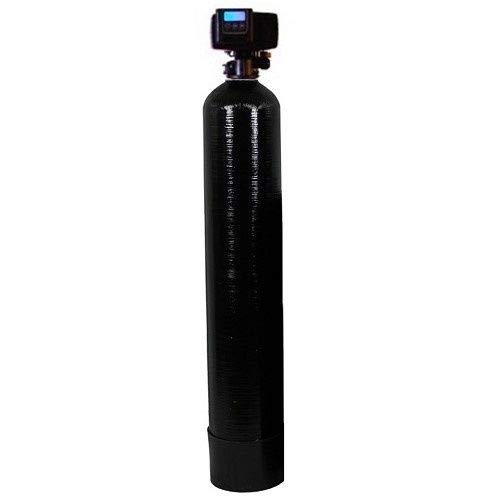
DuraWater Fleck 5600SXT Air Injection Iron Filter, 1.5 Cubic Foot
$899.00 Published specsSized for iron, manganese and a sulfur odor together on the widely serviced Fleck 5600SXT valve.
Best for: A moderate, confirmed hydrogen sulfide level combined with iron
Check price on AmazonWhich sulfur filter handles the strongest odors, and who should skip it?
The largest air injection platform in this category exists for wells whose laboratory numbers are already well above what a smaller unit can keep up with.

AFWFilters Air Injection Platinum Iron, Sulfur and Manganese System, 1.5 Cubic Foot
$1,909.00The highest published sulfur, iron and manganese capacity in this air injection range, sized for larger homes at higher flow.
Best for: A difficult well where a smaller unit has already failed to keep the smell down
Check price on AmazonWho should not buy this tier: Anyone who has not confirmed pH and dissolved oxygen with a full laboratory test, because oxidizing media outside its published operating window does not work regardless of price, and it is also not the answer if the smell is coming from a bacterial colony rather than dissolved gas.
Does regenerant matter for a sulfur filter the way it does for iron?
Only if the media chosen is manganese greensand rather than air injection. Greensand needs a potassium permanganate regenerant, an ongoing purchase somebody has to buy and handle, while air injection uses nothing but an air pocket created on each backwash cycle. That difference is a genuine, ongoing maintenance decision and not a minor one: over several years, a chemical feed system costs meaningfully more in time and consumables than an air injection unit does.
How we chose these products
We compared manufacturer published hydrogen sulfide, iron and manganese ratings and verified owner reviews rather than testing these systems on our own well. Every ppm figure quoted in the table above comes directly from the manufacturer own listing for that specific model.
How we chose
We did not test this equipment in person and we never claim to. Picks are researched from manufacturer specification sheets, published standards and regulatory limits, and the recurring themes in verified owner reviews. Every pick is matched to a real grain capacity, a real micron rating, a real certified claim or a real flow rating rather than to a price bracket, and it is placed in the tier where its published capability actually belongs. We rejected the unbranded flood that dominates several of these search results, because a softener is a pressure vessel on the main line and a filter is the only thing between a contaminant and a glass of water, and neither is a place for a product with no parts channel and no service path. Where a figure is trade convention rather than a published standard we label it that way, and where a manufacturer does not publish a figure we leave it out instead of estimating it. Above all, we do not recommend equipment for a problem nobody has measured.
Sources
- Manufacturer published hydrogen sulfide, iron and manganese ratings for the products linked on this page
Frequently asked questions
Why does my well water smell like rotten eggs?
The smell is hydrogen sulfide gas, produced by anaerobic bacteria in groundwater reacting with sulfur compounds in the soil or rock the well draws from. A weak smell can come from a surprisingly high hydrogen sulfide level and a strong smell from a low one, because the nose is extremely sensitive to it. A certified laboratory test reporting the actual ppm figure is the only reliable way to size a filter.
Is hydrogen sulfide in well water dangerous to drink?
Hydrogen sulfide at the concentrations typical of well water is generally considered a nuisance and taste issue rather than an acute health threat, but it commonly appears alongside iron, manganese and sometimes bacteria that are separate questions entirely. Bacteria, nitrate, lead, arsenic and PFAS are never do it yourself topics and need a certified laboratory test plus a health department or professional regardless of odor.
Does my water heater make the smell worse than my cold taps?
Often, yes. A magnesium anode rod inside a water heater can react with sulfate in the water to produce hydrogen sulfide even when the incoming well water tests relatively low, which is why a smell that appears only on hot water sometimes points at the water heater anode rather than at the well itself. Swapping to an aluminum or powered anode is a separate fix from any filter on this page.
Can a water softener remove hydrogen sulfide?
Not reliably. A softener is built to exchange hardness minerals and a limited amount of dissolved iron, and hydrogen sulfide gas is a different chemistry that a softener resin is not designed to oxidize or capture. Sulfur odor needs a dedicated oxidizing filter ahead of or instead of a softener, sized on the laboratory ppm reading for hydrogen sulfide.
How long does an air injection sulfur filter last before it needs media replaced?
Media life depends on the specific product and the water it is treating, and manufacturers publish their own service life rather than a single industry figure. What does not vary is that the filter needs the pH and hydrogen sulfide level to stay within its published operating range to keep working, so a laboratory retest every few years confirms the system is still matched to the water rather than just assuming the smell has stayed gone.
Will chlorinating my well permanently fix a sulfur smell?
Shock chlorination can temporarily knock down the sulfate reducing bacteria that produce the smell, but it is usually a diagnostic and short term step rather than a permanent fix for ongoing hydrogen sulfide from the surrounding rock or soil. A properly sized oxidizing filter is generally the durable answer, and shock chlorination itself is well work that most owners hire a licensed professional to perform.
Get the complete water treatment shopping list
Every item in the starter, complete and premium systems for both city water and well water, with running totals, in one printable list. It opens with the test kit, because that is genuinely the first purchase. No charge.
One list, no sequence of daily emails, and you can leave at any time.
Researched, not professional advice. This page is compiled from published standards, regulatory limits, manufacturer specifications and owner-review consensus, not hands-on testing. Nothing here diagnoses a water problem or says any product makes water safe to drink. Figures described as a rule of thumb are water treatment trade convention rather than published standards, and they are labeled that way wherever they appear. Test your water before you buy equipment: on city water start with the Consumer Confidence Report your utility publishes each year, and on a private well only a certified laboratory test tells you what you have. Bacteria, nitrate, lead, arsenic and PFAS are not do it yourself topics, they are invisible and tasteless, and they need a laboratory and usually a licensed professional rather than a product. Remember that a certification covers a specific claim under a specific standard, so "NSF certified" with no number attached tells you very little.