Filtration
Pleated or string wound sediment filter: which construction fits your water
Quick answer
A pleated cartridge such as a 20 micron big blue holds far more dirt before pressure drop climbs because its folded design multiplies surface area, and some pleated cartridges are washable and reusable. A string wound cartridge loads through its depth and holds more fine particulate for the same micron rating, but it is never washable. Neither wins outright; they fail in different ways.
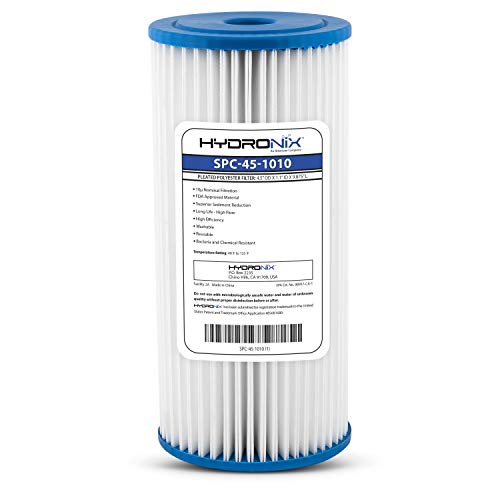
Hydronix SPC-45-1010 Washable Pleated Sediment Filter, 10 by 4.5 Inch
$12.64 Published specsFolded media multiplies surface area for more dirt holding capacity per change, and this specific model is washable and reusable rather than disposable.
Best for: A coarse prefilter position that would otherwise eat cartridges
Check price on Amazon
Aquaboon 5 Micron String Wound Sediment Water Filter, 6 Pack
$31.79 Published specsLoads through its full depth rather than across a folded surface, and is never washable, which is why it commonly ships as a multi pack for routine disposal.
Best for: A year of changes bought at once
Check price on AmazonA pleated sediment cartridge and a string wound sediment cartridge solve the same job, catching coarse particulate ahead of finer stages, through two different physical structures, and neither one is simply the better cartridge. Pleated media wins on holding more dirt for a given pressure drop and, on some specific models, being washable and reused rather than thrown away. String wound media wins on holding more of the very fine end of its rated micron size, because water has to pass through its full depth rather than across a folded surface.
Both are legitimate, and the choice comes down to what is actually loading the cartridge and how it fails. A pleated cartridge that clogs shows a fast, visible pressure drop, while a string wound cartridge tends to let fine sediment slip through gradually as it nears the end of its life rather than choking outright.
What is actually different about how each one gets dirty?
A pleated cartridge is built from a folded sheet of media, usually polyester or cellulose, wrapped around a core. The fold multiplies the surface area available to catch particles compared with a flat sheet of the same height, which is the entire reason it holds more sediment before flow drops off. A string wound cartridge is built the opposite way: a single continuous strand, most often polypropylene, is wound around a core in a graduated pattern so water has to travel through the depth of the strand rather than across a surface. That depth loading is why a string wound cartridge holds fine particulate well for its rated micron size even as the outer layers load up.
Which one is actually washable?
Some pleated cartridges, including the Hydronix SPC-45-1010, are built specifically to be rinsed clean and reused rather than replaced, which lowers the ongoing cost of ownership considerably for a household willing to do the rinsing. A string wound cartridge such as the Aquaboon is never washable. Once its depth structure loads with fine particulate there is no practical way to clean it, which is exactly why it typically ships in a multi pack meant for routine disposal and replacement rather than for cleaning.
Side by side: two different failure modes
Pleated media holds more dirt per change through greater surface area, while string wound media holds fine particulate through its full depth; only some pleated cartridges are washable.
Published figure A published standard, regulatory limit, unit conversion or manufacturer specification. It does not change because somebody disagrees with it.
| Question | Pleated | String wound |
|---|---|---|
| How it catches particles | Across a folded surface | Through its full depth |
| Dirt holding capacity | Higher for a given housing size | Lower, loads faster with heavy sediment |
| Washable and reusable | Only specific models built for it | Never |
| Best at | Fine sediment near its rated micron size, on lighter loads | Very fine particulate held throughout heavy loads |
| Failure mode | Fast, visible pressure drop once loaded | Gradual slip through of fine particulate near end of life |
| Typical construction | Polyester or cellulose, folded | Polypropylene, wound |
A nominal micron rating on either type is not standardized between manufacturers, so it cannot be compared across brands the way an absolute rating can.
Which one should a specific well or city water problem use?
Heavy, gritty well water with a lot of coarse sediment tends to favor a string wound cartridge on the first stage, since its depth structure tolerates a heavier load without the fast pressure drop a pleated cartridge shows under the same conditions. A city water supply with lighter, finer sediment and a wish to avoid frequent cartridge changes tends to favor pleated media, especially a washable model, since the surface area advantage and the option to rinse it both pay off more on a lighter, more consistent load. Either one belongs ahead of a carbon block or a softener, never after it, so it catches particulate before it reaches a finer or more expensive stage.
Frequently asked questions
Can a string wound cartridge be washed and reused like some pleated ones?
No. A string wound cartridge loads through its full depth as a continuous wound strand, and once fine particulate works into that depth there is no practical way to rinse it clean the way a folded pleated surface can sometimes be rinsed. That is why string wound cartridges commonly ship in multi packs meant for routine replacement rather than as a single long term purchase.
Which one clogs faster, pleated or string wound?
It depends on the sediment load. A pleated cartridge shows a faster, more visible pressure drop once its folded surface area loads up under heavy, coarse sediment, while a string wound cartridge tolerates that same heavy load longer because water passes through its depth rather than across a single surface. On a lighter, finer sediment load the advantage often reverses, and pleated media lasts longer.
Does a higher micron number mean a cartridge catches less?
Yes, a higher micron number means larger openings and coarser filtration, catching less fine particulate than a lower micron rated cartridge of the same type. Comparing the number alone across brands is unreliable, though, since a nominal micron rating is not standardized the way an absolute rating is. Only an absolute rating, most often required for a certified cyst reduction claim, is directly comparable between makers.
Can I put a pleated and a string wound cartridge in the same housing at once?
A single housing holds one cartridge at a time, so a two stage setup needs two housings in sequence, typically a coarser cartridge first and a finer one second, regardless of which construction each one uses. Running the coarsest available cartridge first protects whatever comes after it from the heaviest particulate load.
How often should a sediment cartridge actually be changed?
There is no single published number, since it depends entirely on how much sediment the incoming water actually carries, which varies enormously between a clean city supply and a gritty well. Watching for a noticeable drop in flow or checking the housing visually is more reliable than a fixed calendar interval, and a washable pleated cartridge can be rinsed and reinspected rather than replaced on a schedule.
Is a washable pleated cartridge actually cheaper over time than a string wound one?
Often, yes, if the household is willing to do the rinsing, since a single washable cartridge can be reused many times instead of being replaced on each cycle. The comparison depends on the specific published service life for the exact cartridge and how heavy the sediment load actually is, since a heavily loaded washable cartridge needing weekly rinsing may not save money over a string wound multi pack changed less often.
Get the complete water treatment shopping list
Every item in the starter, complete and premium systems for both city water and well water, with running totals, in one printable list. It opens with the test kit, because that is genuinely the first purchase. No charge.
One list, no sequence of daily emails, and you can leave at any time.
Researched, not professional advice. This page is compiled from published standards, regulatory limits, manufacturer specifications and owner-review consensus, not hands-on testing. Nothing here diagnoses a water problem or says any product makes water safe to drink. Figures described as a rule of thumb are water treatment trade convention rather than published standards, and they are labeled that way wherever they appear. Test your water before you buy equipment: on city water start with the Consumer Confidence Report your utility publishes each year, and on a private well only a certified laboratory test tells you what you have. Bacteria, nitrate, lead, arsenic and PFAS are not do it yourself topics, they are invisible and tasteless, and they need a laboratory and usually a licensed professional rather than a product. Remember that a certification covers a specific claim under a specific standard, so "NSF certified" with no number attached tells you very little.