Well water
How to install an iron filter for well water
Quick answer
A backwashing iron filter installs after the well pressure tank and before the softener, with a drain line sized for its backwash flow rate, a bypass valve, and media chosen to match your measured pH. Air injection media needs its own air pocket at the top of the tank, which the control valve draws automatically on each backwash cycle.
An iron filter is a backwashing oxidizing filter, and unlike a cartridge you can put anywhere convenient, it has a specific place in the treatment train and a specific plumbing requirement that a sediment housing does not: a drain. Get the sequence and the drain wrong and the filter either fouls the equipment downstream of it or floods the space it sits in the first time it backwashes.
This page covers the mechanical installation of a backwashing iron filter. It assumes you already have a certified laboratory test showing the measured iron level, form and pH, since the media choice and the sizing both depend on numbers a symptom alone cannot supply. See how to treat iron in well water for how those numbers translate into which type of equipment to buy in the first place.
On this page
Where it goes: after the pressure tank, before the softener
The pressure tank comes first because backwashing equipment needs steady pressure and a sustained flow rate to backwash and rinse its media bed properly, and a well pump cycling on and off under direct pressure swings cannot deliver that reliably. The iron filter comes before the softener because a softener resin bed is not designed to handle oxidized or particulate iron: dissolved ferrous iron within the softener's own published limit can be exchanged along with hardness, but anything above that limit, and any iron that has already oxidized, plugs the resin bed instead of being removed by it.
The practical order on a well with sediment, iron and hardness together is sediment filtration first to protect everything downstream, then the oxidizing iron filter, then the softener, with UV disinfection, when used, placed last so it treats water that is already clear. See what order should water treatment equipment go in for the full sequence including reverse osmosis and pH correction.
The drain line is not optional
A backwashing iron filter cleans itself by reversing flow through the media bed on a schedule set by the control valve, and that backwash water, carrying the iron and manganese the media trapped, has to go somewhere other than back into the house. The drain line needs to be sized for the control valve's actual backwash flow rate, which is published on the valve's own specification sheet, and it needs an air gap at the drain termination so a blocked or surcharged drain cannot siphon contaminated water back into the filter. Running the drain line too far, too high, or with too many fittings restricts backwash flow below what the valve needs to clean the bed properly, which shows up months later as declining capacity that looks like a media problem but is actually a drainage problem.
Media has to match your measured pH
This is the step most responsible for an expensive iron filter that disappoints its owner. Every oxidizing media has a published pH window it needs to work in, and installing the wrong media for your water's measured pH means the filter simply does not oxidize the iron it was bought to remove, regardless of how correctly everything else was installed.
Air injection and Birm both need pH 6.8 or higher; manganese greensand works down to about 6.2 but needs a potassium permanganate feed to regenerate.
Published figure A published standard, regulatory limit, unit conversion or manufacturer specification. It does not change because somebody disagrees with it.
| Media | Minimum pH | Regeneration |
|---|---|---|
| Air injection | 6.8 | Draws its own air pocket, no chemical feed |
| Birm | 6.8 | None; destroyed by chlorine |
| Manganese greensand | 6.2 | Potassium permanganate, an ongoing chemical |
| Catalytic carbon | 6.5 | Aimed at hydrogen sulfide more than iron |
A certified laboratory test reporting pH is required before choosing between these. Installing Birm on water below its published pH window, for example, is a common and entirely avoidable reason an iron filter underperforms.
Air injection has its own quirk worth planning for
Air injection media oxidizes iron against a pocket of air the control valve draws and holds at the top of the tank, which is why these systems need no chemical feed at all: the oxidizer is air rather than a purchased chemical. That air pocket is drawn automatically during the valve's cycle, but the check valve and air draw components that make this work are specific to the air injection control head, and a valve swapped in from a plain backwashing softener will not replicate the function. Confirm the control valve is actually built for air injection, not just a generic backwashing valve, before assuming the system will oxidize iron the way it is supposed to.
Bypass valve, again, essential
Every backwashing filter needs a bypass, either built into the control valve head itself or plumbed around it with ball valves, for the same reason a whole house filter does: it lets the household keep running water while the filter is serviced, backwashed manually, or worked on after a fault. Do not skip it because the control valve looks like it has its own internal service position; confirm that position genuinely isolates the unit before relying on it during a repair.
Installing it, in order
- Confirm the laboratory numbers you are installing against. Have the measured iron level, iron form and pH in hand before choosing media, since all three decide which filter is even the right machine for the job.
- Choose the install location, after the pressure tank. Pick a spot downstream of the pressure tank with room for the tank, the control head, and a drain nearby, plus clearance for a bypass and future service.
- Run and size the drain line. Match the drain line diameter and air gap termination to the control valve's published backwash flow rate rather than to whatever pipe happens to be closest.
- Install the bypass valve. Plumb a bypass valve or three-valve bypass assembly around the unit before making the final connections, so the house can run without the filter in circuit if needed later.
- Set the tank and load the media. Position the mineral tank, add the underbed gravel if specified, and load the oxidizing media matched to your measured pH.
- Connect the control valve and set the program. Wire or set the control head, program the backwash schedule and regeneration time, and confirm the air injection draw or chemical feed, if applicable, is functioning.
- Open the water supply slowly and check for leaks. Bring the system online gradually, checking the tank connections, the bypass, and the drain line connection for leaks under full pressure.
- Run an initial backwash and retest. Trigger a manual backwash cycle to settle and rinse the fresh media bed, then retest the treated water after a settling period to confirm the system is performing against the original laboratory numbers.
What you need on hand
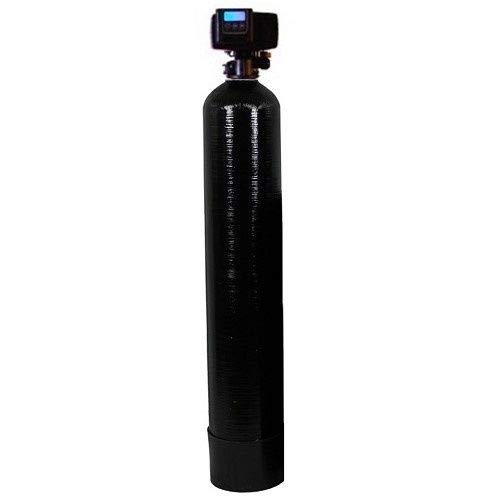
DuraWater Fleck 5600SXT Air Injection Iron Filter, 1.5 Cubic Foot
$899.00 Published specsA complete air injection system on the widely serviced Fleck 5600SXT valve, sized for measured iron, manganese or sulfur together.
Best for: Well water with measured iron, manganese or a sulfur odor together
Check price on Amazon
Katalox Light KL-15 Filter Media for Iron, Manganese and Hydrogen Sulfide
$299.49A catalytic media that works across a wider pH range than Birm and needs no permanganate feed, useful for a rebed on awkward water chemistry.
Best for: A rebed where the water chemistry is awkward for Birm or greensand
Check price on Amazon
GreensandPlus Filter Media, 1.56 Cubic Foot, NSF/ANSI 61 Certified
$469.49NSF/ANSI 61 certified manganese greensand for a rebed where a permanganate feed is already in place.
Check before buying: Greensand needs potassium permanganate regeneration, which is a chemical somebody has to keep buying and handling. Iron removal needs pH above about 6.2 and manganese needs considerably higher.
Best for: Rebedding a greensand filter that already has a permanganate feed
Check price on Amazon
Nelsen Birm Filter Media for Iron Removal, 1 Cubic Foot
$247.00The lowest cost oxidizing media, but only where measured pH is 6.8 or higher and the well is never chlorinated.
Check before buying: Birm requires dissolved oxygen to be present and is DESTROYED BY CHLORINE. It is the wrong media on chlorinated water or on a well that gets shock chlorinated.
Best for: Iron removal where the water already carries dissolved oxygen and pH is above about 6.8
Check price on Amazon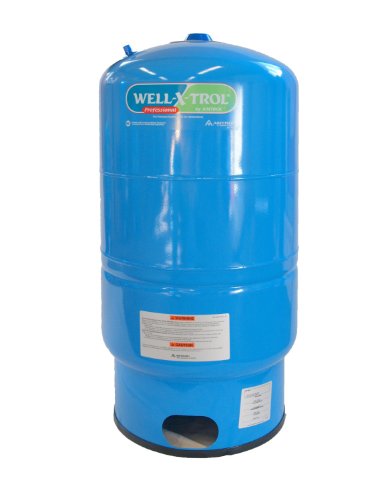
Amtrol Well-X-Trol WX-202 Well Pressure Tank, 20 Gallon
$327.99A reference pressure tank, since a backwashing iron filter depends on the steady pressure and flow a properly charged tank provides.
Best for: Replacing a waterlogged pressure tank on a residential well
Check price on AmazonHow we chose
We did not test this equipment in person and we never claim to. Picks are researched from manufacturer specification sheets, published standards and regulatory limits, and the recurring themes in verified owner reviews. Every pick is matched to a real grain capacity, a real micron rating, a real certified claim or a real flow rating rather than to a price bracket, and it is placed in the tier where its published capability actually belongs. We rejected the unbranded flood that dominates several of these search results, because a softener is a pressure vessel on the main line and a filter is the only thing between a contaminant and a glass of water, and neither is a place for a product with no parts channel and no service path. Where a figure is trade convention rather than a published standard we label it that way, and where a manufacturer does not publish a figure we leave it out instead of estimating it. Above all, we do not recommend equipment for a problem nobody has measured.
Frequently asked questions
Does an iron filter go before or after the water softener?
Before. A softener resin bed is built to exchange dissolved hardness minerals, and it tolerates only a limited amount of dissolved iron within a published manufacturer limit. Iron above that limit, and any iron that has already oxidized to particles, plugs the resin bed rather than being removed by it, so the oxidizing iron filter has to take the load out first.
Why does my iron filter need a drain line?
A backwashing iron filter cleans its own media bed by reversing flow periodically, and that backwash water carries away the iron and manganese the media trapped. It needs somewhere to go other than back into the house, sized to the control valve's published backwash flow rate with an air gap at the termination so a blocked drain cannot siphon back into the system.
Can I use any oxidizing media in any iron filter?
No. Each media has a published pH window it needs to function in, and greensand additionally needs an ongoing potassium permanganate feed that air injection and Birm do not. Installing media outside its pH window, most commonly Birm below pH 6.8, is a common and avoidable reason an iron filter fails to perform despite being installed correctly.
Does an air injection iron filter need electricity or chemicals?
It needs electricity to run the control valve's timer and backwash cycle, but no chemical feed at all. The oxidizer is a pocket of air the valve draws and holds at the top of the tank automatically, which is the main appeal of air injection over greensand, which needs an ongoing potassium permanganate supply somebody has to buy and handle.
Where does an iron filter sit relative to the well pressure tank?
After it. Backwashing equipment needs the steady pressure and sustained flow a charged pressure tank provides, and a filter plumbed ahead of the tank sees the sharp pressure swings of the pump cycling on and off instead, which interferes with a proper backwash cycle.
Do I need a laboratory test before installing an iron filter?
Yes. The media choice depends on your measured pH, and the filter sizing depends on the measured iron level and form. Installing equipment based on a symptom like staining, without those numbers, is how households end up with the wrong media or an undersized unit that looked correct on the shelf.
Get the complete water treatment shopping list
Every item in the starter, complete and premium systems for both city water and well water, with running totals, in one printable list. It opens with the test kit, because that is genuinely the first purchase. No charge.
One list, no sequence of daily emails, and you can leave at any time.
Researched, not professional advice. This page is compiled from published standards, regulatory limits, manufacturer specifications and owner-review consensus, not hands-on testing. Nothing here diagnoses a water problem or says any product makes water safe to drink. Figures described as a rule of thumb are water treatment trade convention rather than published standards, and they are labeled that way wherever they appear. Test your water before you buy equipment: on city water start with the Consumer Confidence Report your utility publishes each year, and on a private well only a certified laboratory test tells you what you have. Bacteria, nitrate, lead, arsenic and PFAS are not do it yourself topics, they are invisible and tasteless, and they need a laboratory and usually a licensed professional rather than a product. Remember that a certification covers a specific claim under a specific standard, so "NSF certified" with no number attached tells you very little.