Well water systems
Which well water filtration system do you actually need?
Quick answer
A well filtration system is a stack of stages, not one box, and the stages you need come from a certified laboratory test rather than a guess. Sediment goes first, oxidation and iron removal second, a softener third if needed, and ultraviolet disinfection last, because UV needs the clearest water in the entire line to deliver its rated dose.
Nobody sells one machine called a "well water filtration system" that fits every well, and that is by design. A well drilled into sandy soil with slightly hard water needs almost nothing. A well with iron, a sulfur odor and low pH needs three or four pieces of equipment in a specific order, plus a softener behind all of it. The only way to tell which well you have is a certified laboratory test, because nobody tests a private well but its owner and there is no annual report to read instead.
This page treats "system" the way the trade does: a stack of stages, assembled in a fixed order, sized off your numbers. It also covers the two most common assembly mistakes, which are putting equipment before the pressure tank and putting a softener ahead of iron removal.
Read your laboratory report first, in this order: pH, then iron and manganese, then hardness, then anything on the bacteria, nitrate, lead, arsenic or PFAS list. Bacteria, nitrate, lead, arsenic and PFAS are never do it yourself topics: they need a certified laboratory test and usually a licensed professional or your local health department, because none of them can be seen, tasted or fixed by guessing.
On this page
- What order does well water treatment equipment go in?
- Which well profile matches a starter system?
- Which well profile matches a complete system?
- Which well profile needs the full premium stack, and who should not buy it?
- What does a laboratory test actually tell you before you buy any of this?
- How does a well water system differ from a city water system?
- How we chose these products
What order does well water treatment equipment go in?
The trade convention runs sediment, then oxidation and iron removal, then a softener, then UV last, and almost all of it installs after the pressure tank.
Rule of thumb Water treatment trade convention rather than a published standard. Taught everywhere, useful for planning, and not a specification. No standards body publishes it.
| Stage | Purpose | Comes after |
|---|---|---|
| Pressure tank | Delivers steady pressure and flow to everything downstream | The well pump |
| Sediment filtration | Protects every stage after it from grit and particulate | The pressure tank |
| Oxidation and iron removal | Treats iron, manganese and often hydrogen sulfide | Sediment filtration |
| Water softener | Removes hardness, and a small amount of remaining dissolved iron | Oxidation and iron removal |
| Ultraviolet disinfection | Inactivates microorganisms in water that is already clear | Everything else, last |
Backwashing equipment needs steady pressure and flow, which is why almost all of it goes after the pressure tank rather than before it.
Which well profile matches a starter system?
A well with a mild sulfur odor and no significant iron reading can often be handled with a single dedicated stage plus a hardness test strip, well short of a full backwashing stack.

The Sulfur Eliminator Deluxe Well Water Filter System
$598.00Aimed directly at hydrogen sulfide odor with a five minute install and no electricity needed.
Best for: A sulfur smell with little or no measured iron, as a first step before a full system
Check price on AmazonWhich well profile matches a complete system?
The most common real well profile is measurable iron plus manganese plus a softener behind it. A digital backwashing filter sized to your ppm figure is the buy once answer here.
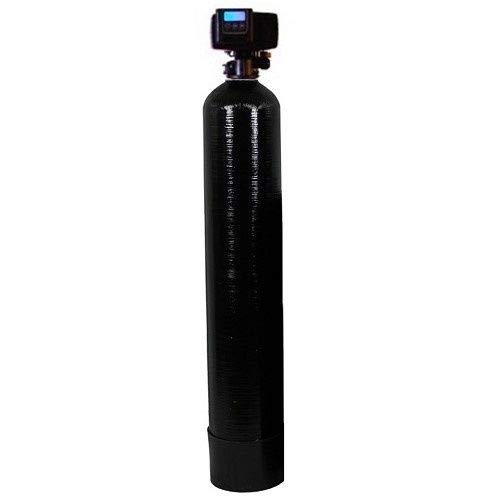
DuraWater Air Injection Iron Filter, 1.0 Cubic Foot
$810.00A one cubic foot air injection platform sized for a smaller household or a moderate measured iron level.
Best for: Iron and manganese together, without an ongoing chemical purchase
Check price on Amazon
iSpring WCFM400K Whole House Iron and Manganese Water Filter System
$1,097.25A digital control valve dedicated to iron and manganese, with a direct manufacturer support line.
Best for: A household that wants a set and forget digital valve rather than a mechanical one
Check price on AmazonWhich well profile needs the full premium stack, and who should not buy it?
A well with high measured iron, sulfur and low pH together, plus a softener and UV behind all of it, is a genuine multi stage build. This tier is expensive and it is also frequently more than a well actually needs.

AFWFilters AIS10-2510 Air Injection Iron, Sulfur and Manganese Oxidizing Filter
$1,399.00Sized for iron and manganese levels above what the entry air injection units are rated to handle.
Best for: A laboratory result well above what a softener or a cartridge could ever address
Check price on AmazonWho should not buy this tier: Anyone who has not had a full laboratory panel, because a multi stage build sized on a guess is the most expensive way possible to discover it does not fit the actual chemistry. It is also not for a well whose only problem is hardness: plenty of households do not need a softener at all, let alone a full stack.
What does a laboratory test actually tell you before you buy any of this?
A mail in test from a certified laboratory reports pH, iron, manganese, hardness and, where relevant, bacteria, nitrate and other regulated parameters against the published limit for each one, rather than as a bare number with no context. Every recommendation above is only as good as that report, and nothing on this page substitutes for it. Reverse osmosis, softening and standard filtration are not treatments for bacteria, nitrate, lead, arsenic or PFAS: those need a certified laboratory test and usually a licensed professional, because they are invisible and give no feedback that equipment has stopped working.
How does a well water system differ from a city water system?
City water customers start from a free annual Consumer Confidence Report their utility already publishes, so the first purchase is usually a hardness test strip. A private well has no such report, no operator, and no guarantee anyone tested it since the last owner. That difference is why well systems are built around a paid laboratory test as the mandatory first step, and it is why the starter, complete and premium ladder on a well looks nothing like the equivalent ladder for a city customer. See our complete well water starter system, complete system and premium system pages for full parts lists at each tier.
How we chose these products
We compared manufacturer published specifications, control valve platforms and verified owner reviews across every category this page draws from, rather than installing units on our own well. Every product token on this page links to a live catalog entry whose ASIN and specifications were checked against the manufacturer own listing.
How we chose
We did not test this equipment in person and we never claim to. Picks are researched from manufacturer specification sheets, published standards and regulatory limits, and the recurring themes in verified owner reviews. Every pick is matched to a real grain capacity, a real micron rating, a real certified claim or a real flow rating rather than to a price bracket, and it is placed in the tier where its published capability actually belongs. We rejected the unbranded flood that dominates several of these search results, because a softener is a pressure vessel on the main line and a filter is the only thing between a contaminant and a glass of water, and neither is a place for a product with no parts channel and no service path. Where a figure is trade convention rather than a published standard we label it that way, and where a manufacturer does not publish a figure we leave it out instead of estimating it. Above all, we do not recommend equipment for a problem nobody has measured.
Sources
- EPA secondary and primary drinking water regulations
- Manufacturer published specifications for the systems linked on this page
Frequently asked questions
Do I need a whole system or just one filter?
That depends entirely on your laboratory report. A well with only a mild hardness reading and no iron, manganese or sulfur needs a softener alone or nothing at all. A well with iron, manganese and a sulfur odor together genuinely needs a multi stage stack. Buying a full system for a single, mild issue wastes money, and buying a single filter for a multi contaminant well leaves most of the problem untreated.
Can I install a well water filtration system myself?
Many of the cartridge and single stage products on this page are built for a homeowner install with basic plumbing skills. Backwashing tank systems are more involved but still commonly self installed. Anything touching bacteria, nitrate, lead, arsenic or PFAS, or requiring shock chlorination of the well itself, is not a do it yourself project and needs a certified laboratory test plus a licensed professional.
What is the single most common mistake in assembling a well system?
Installing a softener ahead of iron removal, or installing treatment equipment ahead of the pressure tank instead of after it. Unoxidized iron fouls softener resin quickly, and equipment installed before the tank sees pressure swings every time the pump cycles, which is hard on backwashing valves. The published order is sediment, then oxidation, then softening, then UV, installed after the pressure tank.
Does a whole system remove bacteria or nitrate?
Not automatically. Standard filtration, softening and even ultraviolet disinfection each address a specific, tested contaminant, and none of them are a general purpose fix for bacteria, nitrate, lead, arsenic or PFAS. Those need a certified laboratory test first and usually a licensed professional or your local health department, because a filter pitcher or a generic system gives no feedback that it has failed against any of them.
How often does a well system need attention once it is installed?
Backwashing filters and softeners regenerate on their own schedule and mainly need media or resin replaced every several years. Ultraviolet lamps need replacement annually on a fixed date regardless of whether they still light, because output falls steadily. Retesting your well water on a regular schedule, and after any well work or flooding, is the ongoing task that confirms the whole stack is still doing its job.
Is a bigger, more expensive system always the safer choice?
No. Oversizing does not add a safety margin here the way it might elsewhere, because each stage is matched to a specific published ppm range or pH window. A system built for iron levels your well does not have wastes money without addressing what your water actually contains, while a genuinely difficult well needs exactly the stack its laboratory numbers call for, no more and no less.
Get the complete water treatment shopping list
Every item in the starter, complete and premium systems for both city water and well water, with running totals, in one printable list. It opens with the test kit, because that is genuinely the first purchase. No charge.
One list, no sequence of daily emails, and you can leave at any time.
Researched, not professional advice. This page is compiled from published standards, regulatory limits, manufacturer specifications and owner-review consensus, not hands-on testing. Nothing here diagnoses a water problem or says any product makes water safe to drink. Figures described as a rule of thumb are water treatment trade convention rather than published standards, and they are labeled that way wherever they appear. Test your water before you buy equipment: on city water start with the Consumer Confidence Report your utility publishes each year, and on a private well only a certified laboratory test tells you what you have. Bacteria, nitrate, lead, arsenic and PFAS are not do it yourself topics, they are invisible and tasteless, and they need a laboratory and usually a licensed professional rather than a product. Remember that a certification covers a specific claim under a specific standard, so "NSF certified" with no number attached tells you very little.